Provenance and Purpose: Why Vintage and Antique Jewelry Has Become the Connoisseur's Most Compelling Category
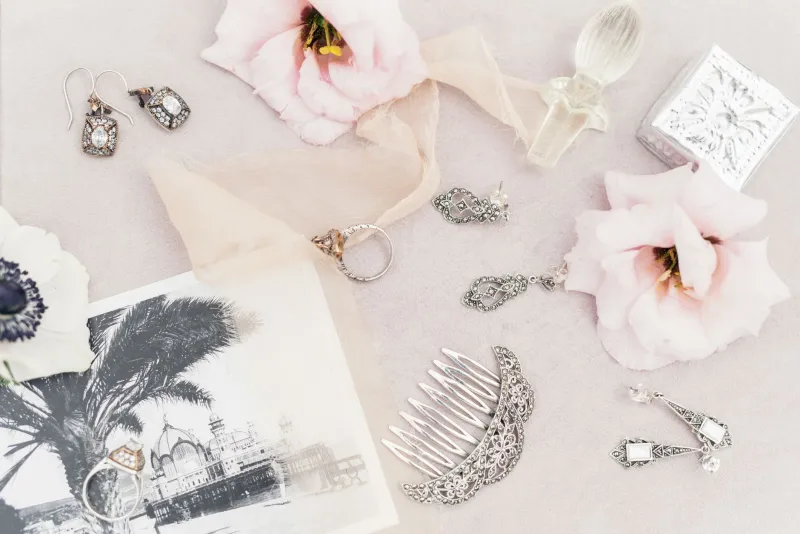
For much of the twentieth century, pre-owned jewelry occupied an ambiguous space in the American luxury market — neither quite as desirable as something newly acquired nor as clearly valued as fine art or rare watches. That perception has shifted with remarkable speed. Today, vintage and antique jewelry sits at the intersection of several powerful cultural currents: a renewed appreciation for handcraft and historical technique, a growing consciousness around sustainability, and a collector's instinct for pieces that carry genuine provenance rather than manufactured prestige.
The result is a secondary market that is not merely active but genuinely competitive — one in which a Georgian mourning brooch or an Art Deco platinum-set diamond bracelet commands serious attention from serious buyers. Understanding why this category has ascended, and how to participate in it with intelligence and confidence, is a subject worth examining with care.
What the Terms Actually Mean
Before entering this market, a working understanding of its vocabulary is essential. The distinctions between antique, vintage, and estate jewelry are not merely semantic — they carry real implications for valuation, rarity, and the kind of craftsmanship you can expect to encounter.
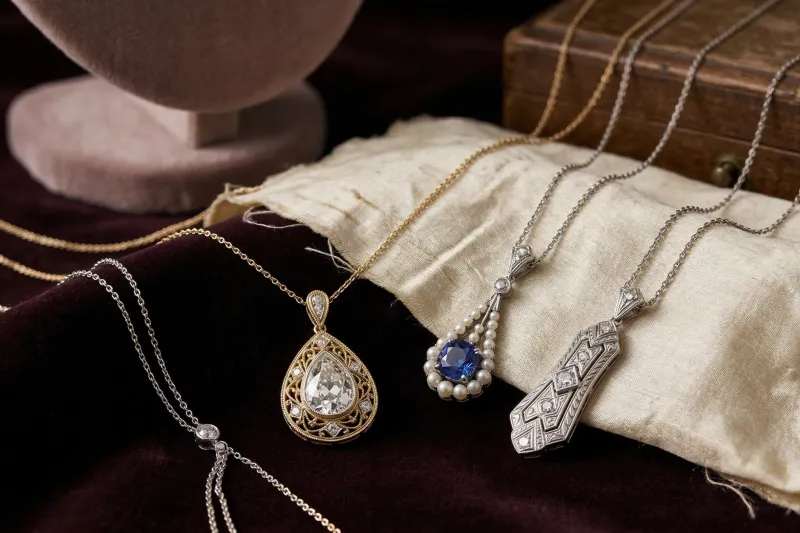
In the United States, jewelry is generally classified as antique when it is at least one hundred years old. This threshold places antique jewelry in the Georgian, Victorian, and early Edwardian periods — eras defined by hand-fabrication techniques, labor-intensive stone setting, and materials that are increasingly difficult to source or replicate. Vintage jewelry, by contrast, typically refers to pieces from the early twentieth century through approximately the 1980s, encompassing the Art Nouveau, Art Deco, Retro, and Mid-Century Modern periods, each with its own distinctive visual language. Estate jewelry is the broadest and most commercially neutral term, referring simply to any pre-owned piece, regardless of age.
For collectors, understanding these distinctions shapes both the search and the evaluation process. A genuine Art Deco piece — characterized by its geometric precision, milgrain detailing, and preference for platinum and calibré-cut stones — is a categorically different acquisition from a 1980s estate piece, even if both are described simply as "vintage" in casual usage.
The Case for Craftsmanship
One of the most compelling arguments for vintage and antique jewelry is one that cannot be easily replicated by contemporary production: the quality of handwork from earlier periods is, in many respects, genuinely superior to what industrial manufacturing can achieve today.
Georgian and early Victorian jewelers worked without the assistance of modern casting technology, constructing pieces by hand using techniques — repoussé metalwork, cannetille filigree, foil-backed stone settings — that required years of specialized training to master. Art Deco platinum smithing, with its extraordinary fineness of detail and structural precision, represents a pinnacle of the jeweler's craft that very few contemporary workshops can match in terms of sheer technical execution.
For the collector who prizes exceptional making as much as exceptional materials, antique and vintage jewelry offers something the new market rarely can: evidence of a human hand at every stage of creation.
Authenticity and Authentication
The enthusiasm surrounding pre-owned luxury jewelry has, predictably, attracted a corresponding increase in misrepresentation — pieces sold as one period that belong to another, reproductions presented as originals, and stones that have been replaced or enhanced without disclosure. Navigating this landscape requires both knowledge and appropriate professional support.
Several markers of authenticity are accessible even to the non-specialist. Hallmarks — the stamped codes found on most fine jewelry that indicate metal content and, in some cases, country and date of manufacture — are among the most reliable indicators of a piece's origin. British hallmarks, in particular, are among the most rigorously documented in the world, often allowing precise dating and attribution. American pieces of the same era are less consistently marked, but reputable dealers can often provide supporting documentation.
Beyond hallmarks, the construction of a piece tells its own story. Antique settings typically show specific characteristics — old mine cut or rose cut diamonds rather than modern brilliant cuts, closed-back settings in earlier pieces, hand-engraving rather than machine engraving — that are difficult to fake convincingly and relatively straightforward to identify once you know what to look for.
For significant acquisitions, independent appraisal from a Graduate Gemologist credentialed by the Gemological Institute of America (GIA) is not merely advisable — it is essential. A qualified appraiser can assess both the material value and the period authenticity of a piece, providing documentation that protects your investment and informs any future resale.
The Sustainability Dimension
The environmental conversation around fine jewelry has grown considerably more sophisticated in recent years, and vintage and antique acquisition has emerged as one of the most genuinely defensible positions within it. A pre-owned piece carries no incremental demand for newly mined gemstones or freshly refined metals — the environmental cost of its creation was borne by a previous generation, and what remains is simply the object itself.
This is a meaningful distinction for a growing segment of American luxury consumers who wish to participate in fine jewelry culture without contributing to the extractive pressures associated with new production. It does not require a wholesale rejection of contemporary jewelry — there are new producers operating with genuine ethical rigor — but it does offer a clear alternative for those whose priorities include environmental accountability alongside aesthetic pleasure.
Where and How to Source
The secondary jewelry market in the United States spans an enormous range of venues, from major auction houses — Sotheby's, Christie's, and Bonhams regularly offer significant estate jewelry sales — to specialist dealers in cities like New York, Los Angeles, and Chicago, to the increasingly sophisticated online secondary market.
Each channel carries its own risk-reward profile. Auction houses offer the highest level of institutional vetting but also the highest prices and the least flexibility for negotiation or return. Specialist dealers offer expertise, provenance research, and often a more curated selection, with the added benefit of an ongoing relationship that can prove invaluable as your collection develops. Online platforms have democratized access considerably, but they require heightened due diligence on the part of the buyer.
Regardless of channel, the most reliable protection is knowledge — of period characteristics, of fair market value, and of the specific questions to ask before any purchase is completed.
Collecting as an Act of Preservation
There is a dimension of vintage and antique jewelry collecting that goes beyond investment logic or environmental calculation, one that is perhaps the most persuasive argument of all: these pieces have already survived. They have passed through hands, marked occasions, traveled across decades, and arrived in the present intact. To acquire one is not merely to own a beautiful object — it is to become the next custodian of something that has already proven its durability and worth.
At BijOnline, we regard this category with particular respect precisely because it embodies the values we hold most central: exceptional craft, enduring beauty, and the kind of meaning that accumulates only with time. A piece of antique jewelry does not merely decorate — it connects. And in that connection lies its truest luxury.