The Eloquence of Less: How Minimalist Fine Jewelry Became the New Language of Luxury
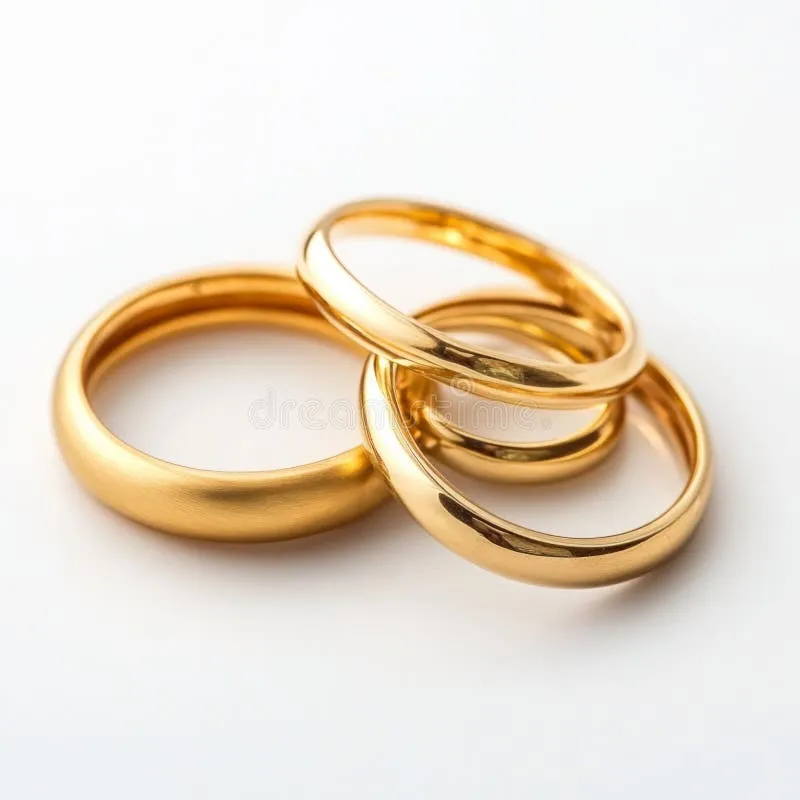
Photo: minimalist fine jewelry gold ring pendant elegant white background luxury, via thumbs.dreamstime.com
There is a particular kind of confidence that requires no announcement. It does not arrive with fanfare, does not demand a second glance, and does not compete for the room's attention. It simply exists — composed, certain, and entirely self-possessed. This is precisely the quality that the most compelling minimalist jewelry embodies, and it is why a growing community of American luxury consumers is choosing the whisper over the shout.
The cultural conversation around fine jewelry is shifting in a meaningful direction. Where previous generations may have equated opulence with volume — layered chains, statement cocktail rings, and gemstones sized for visibility — today's collector increasingly measures sophistication by what has been deliberately left out. The result is a category of jewels that rewards the attentive eye rather than commanding every eye in the room.
Restraint as a Radical Act
To understand why minimalist jewelry carries such weight in the current moment, it helps to consider what it is reacting against. For much of the early social media era, jewelry functioned as visual currency — pieces selected for their photographic impact, their ability to register at a glance, their capacity to signal status in a single scrolled image. Bigger stones, bolder silhouettes, and louder combinations dominated wish lists and Instagram grids alike.
The backlash, when it arrived, was not loud. It rarely is. Instead, a quieter aesthetic began to assert itself among collectors who had grown weary of conspicuous consumption. Clean lines. Single-stone settings. Bands of polished gold so refined they seemed almost architectural. The rejection of excess was not born of austerity but of discernment — a recognition that true luxury has never needed to prove itself.
In this context, choosing a slender pavé eternity band over a heavily embellished alternative is, in its own way, a radical act. It communicates that the wearer understands quality at a granular level, that they are not relying on scale to do the work that craftsmanship should.
The Design Philosophy Behind the Movement
Minimalist fine jewelry is frequently misunderstood as simple. It is anything but. The absence of decorative complexity places the full burden of excellence on material quality, proportion, and finish. A solitaire pendant in 18-karat yellow gold leaves nowhere for mediocrity to hide. Every millimeter of the setting, every degree of the chain's drape, every surface of the stone's cut becomes a statement in itself.
This is why the finest minimalist pieces often carry price points that surprise those who equate visual restraint with reduced cost. The opposite tends to be true. When a designer commits to a single, perfectly formed element — a bezel-set oval sapphire, a knife-edge band, a sculptural ear cuff in brushed platinum — the investment shifts entirely into the integrity of execution. There is no ornamentation to absorb an imperfect weld or mask an inconsistent finish.
For the collector who understands this, the minimalist piece becomes a kind of litmus test for a jeweler's true capability. It is the equivalent of a chef preparing a perfectly roasted chicken: the dish that sounds effortless is the one that reveals everything.
What American Consumers Are Choosing — and Why
Across the United States, the appetite for refined, understated jewelry is evident in both purchasing patterns and cultural conversation. Younger luxury consumers — particularly those in their thirties and forties who have accumulated both financial confidence and aesthetic clarity — are gravitating toward pieces that integrate seamlessly into daily life while retaining unmistakable quality.
The concept of the "forever piece" has taken on new meaning in this context. Rather than a jewel reserved for formal occasions, today's collector seeks something worthy of Tuesday morning as much as Saturday evening. A slender diamond tennis bracelet worn to a client meeting. A pair of small, lustrous South Sea pearl studs that accompany a weekend at a Vermont inn with the same quiet elegance they bring to a Manhattan dinner. The minimalist piece earns its place precisely because it belongs everywhere.
There is also a generational dimension worth acknowledging. Millennial and Gen Z luxury buyers have demonstrated a pronounced skepticism toward conspicuous wealth signaling, favoring brands and aesthetics that align with values of intentionality and considered consumption. A piece of jewelry that does not shout its price tag — but rewards those who know enough to recognize its value — fits this sensibility with remarkable precision.
The Timelessness Argument
Perhaps the most compelling case for minimalist fine jewelry is its relationship with time. Maximalist trends, by their nature, are tethered to the moment of their creation. The chunky gold chain that defines a particular season can, within a few years, read as a relic of that season rather than a timeless acquisition.
Minimalist design, by contrast, operates outside the gravitational pull of trend cycles. A flawlessly proportioned gold hoop, a single-stone ring set in a clean bezel, a delicate bar necklace in white gold — these pieces do not age in the way that heavily styled jewels can. They exist in a kind of elegant suspension, as appropriate in 2045 as they are today.
For the collector thinking in terms of legacy — who envisions a piece passing from their hands to a daughter's, a niece's, or a chosen inheritor's — this timelessness is not merely aesthetic. It is a form of investment in longevity, a guarantee that the jewel will not require recontextualization to remain relevant.
Wearing Minimalism with Intention
Adopting a minimalist jewelry philosophy does not mean wearing less for its own sake. It means wearing with greater purpose. Each piece selected for the wrist, the ear, the neckline carries more weight when it is not competing with a dozen others for attention. The single ring that occupies the index finger becomes a declaration. The one necklace chosen for the day becomes a through-line of personal style.
This intentionality is, in many respects, the point. Minimalist jewelry invites its wearer into a more conscious relationship with adornment — asking not merely "does this look good?" but "does this piece belong to who I am, and who I am becoming?"
At BijOnline, we have always believed that the most exquisite jewelry is that which feels inevitable on the body that wears it. The minimalist movement, at its finest, embodies exactly this principle. It is not about having less. It is about choosing with such precision that every piece you own feels, in the truest sense, irreplaceable.
The quiet power of understatement is, in the end, the loudest thing in the room — for those with the discernment to hear it.