Passing the Torch: A Thoughtful Guide to Heirloom Jewelry Succession and the Emotions That Come With It

There is a particular weight to a piece of jewelry that has traveled through generations. A diamond solitaire worn on the hand of a grandmother, a pearl strand fastened at the neck of a mother on her wedding day, a signet ring passed from father to son — these objects carry something that no newly purchased piece can replicate: the accumulated meaning of lives lived. Yet the very intimacy that makes heirloom jewelry so precious is also what makes the question of succession so fraught.
When should a beloved piece change hands? Who should receive it? And what happens when the intended recipient simply does not connect with it aesthetically? These are not trivial concerns. Handled thoughtfully, the passing of family jewelry can become one of the most profound gestures of love and continuity a family shares. Handled poorly, it can become a source of lasting hurt.
The Question of Timing
There is no universally correct moment to pass down a family piece, but there are several life events that naturally invite the conversation. Engagements, milestone birthdays, significant anniversaries, and the birth of a grandchild are all occasions that lend themselves to the ceremonial transfer of something precious. Many families find that gifting a piece while the original owner is still present to share its story is far preferable to leaving the decision to an estate.
This approach — sometimes called a "living inheritance" — carries a distinct advantage: the giver can speak to the piece's history, describe the occasions on which it was worn, and articulate why it is being entrusted to this particular person. That narrative context transforms a beautiful object into something far more meaningful. A diamond ring is lovely on its own. A diamond ring accompanied by the story of the proposal it commemorated becomes irreplaceable.
For those who prefer to formalize the process, working with an estate attorney to document jewelry bequests specifically in a will is strongly advisable. Vague language such as "personal property" in estate documents has generated more family conflict than most people anticipate. Specificity is an act of kindness.
When Sentiment and Aesthetics Diverge
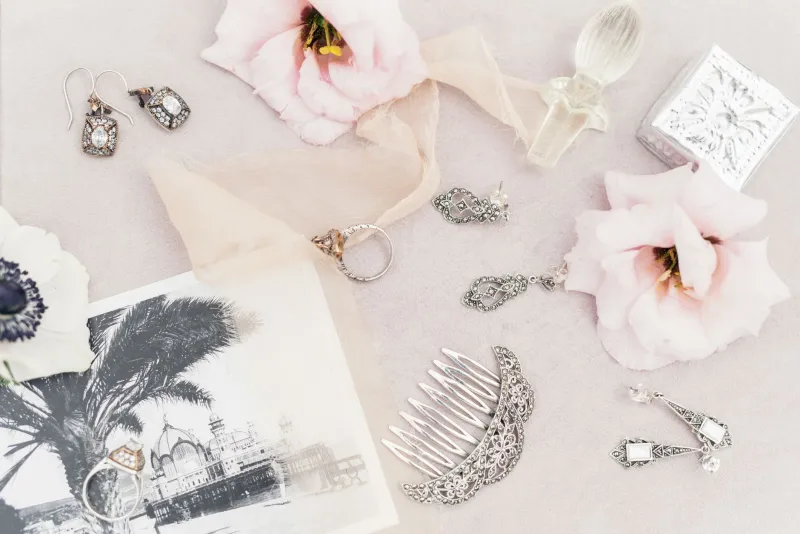
One of the most delicate situations in heirloom succession arises when a piece carries enormous emotional weight but does not align with the recipient's personal style. Perhaps a grandmother's engagement ring features an ornate Victorian setting that feels mismatched with a granddaughter's minimalist aesthetic. Perhaps a mid-century brooch, however exquisite, would simply never be worn.
This tension deserves honest acknowledgment rather than avoidance. A cherished piece left unworn in a drawer honors no one. In these circumstances, several thoughtful paths present themselves.
The first is open conversation. Families who can discuss these preferences candidly — without judgment or guilt — often discover creative solutions together. The recipient may love the center stone but find the setting dated. The giver, if still living, may be more open to redesign than the recipient assumes.
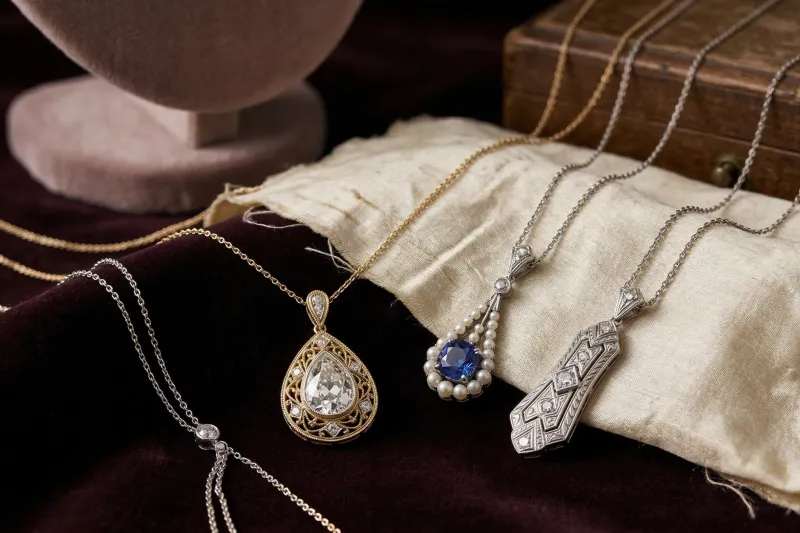
The second path is professional redesign, and it is more widely embraced today than ever before. Skilled jewelers across the country specialize in working with inherited stones and meaningful metal, reimagining them in contemporary settings that honor their origin while making them genuinely wearable. A cushion-cut sapphire from a 1940s cocktail ring, for instance, might find extraordinary new life in a sleek modern bezel setting. The stone — and its story — remains entirely intact. Only its presentation evolves.
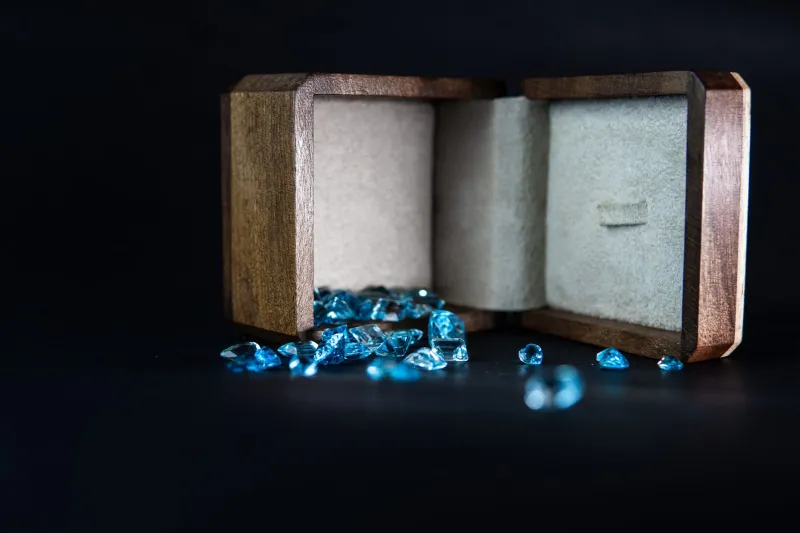
At BijOnline, we believe that redesigning an heirloom is not a betrayal of its history. It is, in many ways, an act of continued love — ensuring that a precious stone continues to be worn, admired, and passed further down the line rather than quietly retiring to a velvet box.
Navigating Fairness Among Siblings and Family Members
When a family's jewelry collection is significant, questions of equitable distribution inevitably arise. It is worth noting that "fair" and "equal" are not synonymous. A collection of five pieces divided among three siblings will never distribute with mathematical precision, and attempting to force it often diminishes the meaning of every piece involved.
A more constructive approach involves having pieces professionally appraised so that their monetary values are clearly understood. This allows families to balance distributions across broader estate assets, rather than treating jewelry in isolation. It also removes the guesswork and assumption that so frequently fuel misunderstandings.
Where genuine conflict exists, the services of a professional mediator — or simply a trusted family advisor — can create the neutral space needed for productive conversation. The goal, always, is to honor both the pieces and the relationships.
For Those Receiving an Heirloom
Recipients of family jewelry carry their own emotional complexity. Accepting an heirloom graciously, even when the piece is not to one's taste, is a social grace worth cultivating. Expressing genuine appreciation for the intention behind the gift — while privately exploring options for respectful redesign later — is entirely appropriate.
It is also worth resisting the impulse to make immediate decisions about a newly inherited piece. Grief, in particular, can distort one's relationship to objects. A ring that feels overwhelming to wear in the immediate aftermath of a loss may, in time, become a source of profound comfort. Allowing a period of reflection before deciding whether to wear, redesign, or eventually pass on a piece is always wise.
The Enduring Purpose of Heirloom Jewelry
At its core, the tradition of passing down jewelry is an act of storytelling. Each piece that moves through a family carries within it a record of the people who wore it, the moments it witnessed, and the values it represented. That is a legacy worth tending carefully.
Whether you are a grandparent considering which pieces to bestow and when, a parent navigating the delicate question of sibling fairness, or a recipient uncertain how to honor what you have been given, the guiding principle remains the same: approach the conversation with the same care and intentionality you would bring to the jewelry itself. Both deserve nothing less.