The New Vanguard: How Independent Jewelry Designers Are Reshaping the Meaning of Luxury
For much of the twentieth century, the definition of fine jewelry luxury was relatively uncomplicated. It lived at certain addresses — on Fifth Avenue in New York, on Worth Avenue in Palm Beach — and it arrived in distinctive boxes bearing names that required no explanation. The prestige was institutional, inherited, and largely self-referential. You purchased from a house because the house itself was the point.
That model has not disappeared. But it is no longer the only conversation worth having.
Across the United States and internationally, a generation of independent jewelry designers — many of them working in small studios with limited production runs — is building a compelling alternative narrative. Their pieces do not come in iconic blue boxes. They are not advertised during awards season. But among a growing cohort of thoughtful collectors, they are generating a level of genuine enthusiasm that the established houses have not seen directed at their work in some time.
What Is Driving the Shift
The movement toward independent jewelry makers is not a single trend but the convergence of several. The first is a cultural fatigue with logo-driven luxury — a weariness, particularly among younger collectors in their thirties and forties, with wearing someone else's brand identity as a proxy for their own taste. When a piece announces its maker more loudly than it expresses its wearer, something has been inverted.
The second driver is a deepened interest in provenance and process. The same consumer who wants to know how their food was grown and where their clothing was sewn is now asking equivalent questions about their jewelry. Who made this? Under what conditions? Where did the metal originate? These are not fringe concerns — they are the questions of an increasingly informed and engaged collector class.
The third is simply the quality of the work itself. Contemporary independent designers, many of them trained at institutions like the Rhode Island School of Design, the Savannah College of Art and Design, or internationally at the Royal College of Art in London, are producing work of extraordinary technical accomplishment. The absence of a famous name does not indicate the absence of mastery.
Craftsmanship as the New Status Signal
In the vocabulary of contemporary jewelry collecting, craftsmanship has become the new status signal — and it is one that requires considerably more knowledge to read than a logo.
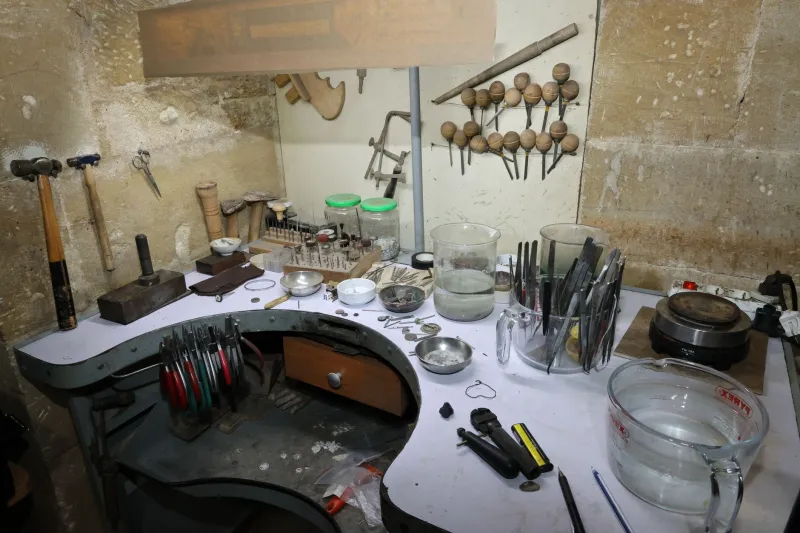
Consider what distinguishes a hand-fabricated piece from a cast one. In hand fabrication, the jeweler constructs the piece from raw metal stock — sawing, forming, soldering, and finishing each element individually. The result carries the subtle evidence of human decision-making at every junction: a slightly organic curve, a texture that responds differently to light than a machined surface would. These are not imperfections. They are signatures.
Collectors who have developed the eye to recognize this distinction — who can hold two pieces of comparable material value and identify which one required ten hours of bench work and which one was cast from a mold in twenty minutes — possess a form of aesthetic literacy that no amount of brand familiarity can substitute. Independent designers, who often make their process transparent through studio visits, social media documentation, and direct collector relationships, are accelerating this education.
Sustainability as Aesthetic Philosophy
Many of the most compelling independent designers working today have integrated sustainable sourcing not as a marketing position but as a genuine aesthetic philosophy. The use of recycled precious metals, ethically sourced or lab-grown diamonds, and fair-trade colored gemstones is, for these makers, continuous with their broader commitment to intentional creation.
Designers such as those working within the Ethical Metalsmiths network, or those certified through the Responsible Jewelry Council, have demonstrated that the constraints of ethical sourcing can become generative rather than limiting. When you cannot simply reach for the cheapest available material, you become more deliberate — more inventive — in your material choices. The results often show.
For the American collector, this dimension of the contemporary independent scene offers something the traditional luxury market has rarely provided: the ability to wear a piece whose beauty is consistent with one's values, without any compromise in quality or design sophistication.
Building a Collection Around Contemporary Makers
Approaching independent designers as a collector requires a somewhat different orientation than purchasing from an established retailer. Discovery is more active — it happens through art jewelry fairs such as the Smithsonian Craft Show, through platforms that curate independent maker work, through studio visits, and through the kind of word-of-mouth that circulates among collectors who take the category seriously.
Relationships matter more than transactions. Many independent designers work on commission for significant pieces, engaging in a genuine dialogue with the collector about form, material, and intention. This collaborative dimension — the experience of wearing something made in direct conversation with its maker — is simply not available from a heritage house, and for many collectors, it becomes one of the most valued aspects of the acquisition.
From a value perspective, the secondary market for signed work by emerging designers who achieve critical recognition can be surprisingly robust. Early acquisition of a designer who subsequently gains significant museum attention or press coverage has, in several notable cases, proven to be as financially intelligent as it was aesthetically prescient.
The Broader Significance for Fine Jewelry
What the independent jewelry movement ultimately represents is a democratization of the definition of luxury itself — not in the sense of making it cheaper or more accessible, but in the sense of making it more diverse. Luxury, in this expanded understanding, is not the exclusive property of a handful of houses with century-old addresses. It belongs to any maker who brings exceptional skill, genuine vision, and material integrity to the bench.
For collectors willing to look beyond the familiar names, the contemporary independent scene offers something genuinely rare: the opportunity to participate in a living creative tradition, to support makers whose best work may still be ahead of them, and to build a collection that reflects not borrowed prestige but one's own cultivated point of view.
At BijOnline, we believe that is among the most sophisticated things a collector can do.