What Lies Beneath the Lid: Unlocking the Hidden Potential of Your Existing Jewelry Collection
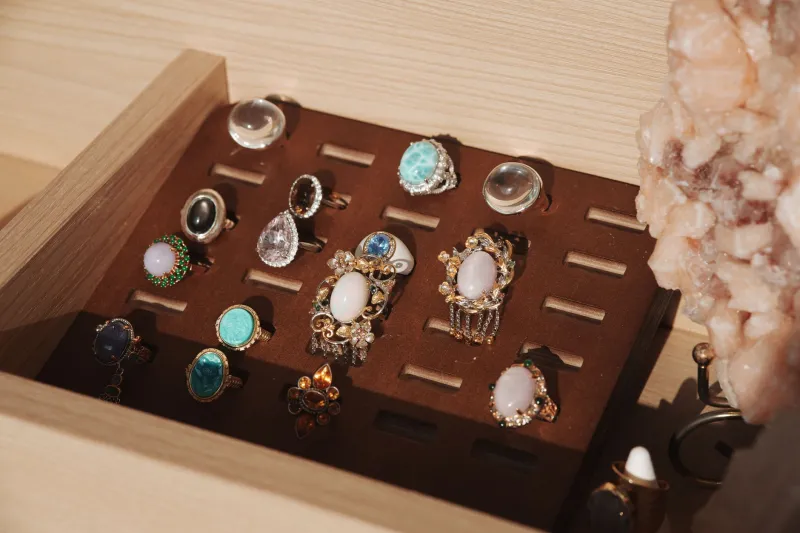
There is a particular kind of discovery that requires no travel, no auction catalog, and no appointment with a dealer. It asks only that you clear an afternoon, set aside distraction, and open the jewelry box you have been meaning to organize since last autumn. What emerges from that exercise — conducted with genuine curiosity and a collector's discipline — can be nothing short of revelatory.
Seasonal collection reviews have long been a quiet practice among serious collectors, though they rarely receive the attention lavished on acquisition strategies or gemstone education. That oversight is a meaningful one. The pieces already in your possession represent capital already deployed, taste already expressed, and in many cases, value that has quietly appreciated while sitting beneath a tangle of everyday chains.
The Case for a Structured Approach
Casual rummaging is not an audit. To extract genuine insight from your collection, you need a method. Begin by removing every piece from every storage location — the primary jewelry box, yes, but also the travel case, the ceramic dish on the bathroom counter, the small pouch tucked inside a clutch you carried to a wedding three years ago. Consolidation is the first step, because fragmentation is the enemy of clarity.
Once everything is before you, organize by category: rings, earrings, necklaces, bracelets, brooches, and any specialty items such as hair accessories or watch straps. Within each category, separate fine jewelry from fashion pieces. This is not a hierarchy of worth — a well-made fashion piece can hold sentimental and stylistic value — but it is a necessary distinction for what comes next.
Identifying What You Have Forgotten — and Why
Among the pieces you have not worn in two or more years, there are almost certainly several that deserve a second look. Ask yourself honestly why each piece fell out of rotation. The answers tend to cluster into a few categories.
Some pieces were set aside because they no longer matched a wardrobe that has since evolved. But wardrobes evolve again, and the maximalist layering aesthetic that currently dominates American fine jewelry culture means that older, more sculptural pieces — chunky link chains, architectural pendants, bold cocktail rings — may now be more relevant than when you last wore them.
Others were displaced by newer acquisitions that felt more exciting at the time. This is worth examining. The newer piece that eclipsed a classic may itself be a passing enthusiasm, while the piece it replaced could represent a more enduring expression of your taste.
Still others may have been shelved due to minor condition issues: a loose prong, a worn clasp, a chain that tangles. These are not reasons to abandon a piece — they are straightforward repair opportunities that, once addressed, restore a piece to full wearability and protect its long-term value.
The Market Has Not Stood Still
One of the most consequential reasons to conduct a regular collection review is that the fine jewelry market is not static. Pieces you acquired five, ten, or fifteen years ago exist in a very different pricing environment today.
Gold, for instance, has experienced substantial price appreciation over the past several years, which means that pieces with significant gold weight — even those you consider purely sentimental — may carry considerably more intrinsic value than when you purchased them. The same logic applies to platinum, which has seen renewed collector interest as its rarity relative to gold becomes more widely understood.
Colored gemstones tell an equally compelling story. Certain stones that were considered secondary to diamonds a decade ago — padparadscha sapphires, Paraíba tourmalines, unheated Burmese rubies — have seen dramatic appreciation in the collector market. If your collection includes any significant colored stone pieces, a current appraisal is not merely prudent; it is essential.
Vintage and estate pieces occupy their own accelerating market. American collectors have developed a genuine appetite for mid-century and Art Deco jewelry in recent years, driven partly by broader cultural nostalgia and partly by a growing recognition of the exceptional craftsmanship those eras produced. A brooch inherited from a grandmother or a retro-era cocktail ring purchased at an estate sale may now command prices that would surprise you.
Practical Steps After the Audit
Once you have catalogued what you own and identified the pieces that warrant closer attention, several practical actions follow naturally.
Commission updated appraisals. Any piece of significant value — whether sentimental, financial, or both — should have a current appraisal from a credentialed gemologist. Appraisals age, and an insurance document written in 2012 does not reflect today's replacement costs. The Gemological Institute of America (GIA) maintains a directory of certified professionals across the United States.
Consult a conservator or trusted jeweler about repairs. A piece with a compromised setting or worn mechanism is not merely an aesthetic problem — it is a liability. Loose stones fall out. Broken clasps mean lost necklaces. Addressing these issues promptly is both protective and financially sensible.
Reconsider pieces for reimagining. Some pieces in your collection may be better suited to a new form than to continued storage. Resetting a stone into a contemporary mounting, converting a brooch into a pendant, or combining elements from multiple pieces into a single new design are all legitimate options that preserve the material and sentimental value of what you own while giving it renewed life.
Evaluate what genuinely no longer belongs. Not every piece deserves a permanent place in your collection. Pieces that do not align with your current aesthetic, that carry no meaningful personal history, and that have appreciated in market value may be excellent candidates for consignment or sale. Releasing them thoughtfully generates resources for acquisitions that serve your collection more precisely.
The Discipline of Knowing What You Own
There is a quiet confidence that comes from understanding your collection completely — knowing not just what you have, but what it is worth, what condition it is in, and what role each piece plays in the larger story your jewelry tells about you. That confidence is not available to those who treat their jewelry box as an archive rather than a living collection.
The seasonal audit is, at its core, an act of stewardship. It is the practice of a collector who takes seriously both the beauty and the responsibility of what she has assembled. In that sense, it is less a chore than a ritual — one that rewards attention with discovery, and discipline with delight.