Less Is More Luxurious: How America's Most Discerning Collectors Are Redefining Wealth Through Jewelry Restraint
There was a time, not so long ago, when the measure of a serious jewelry collector was the sheer volume of what she owned. Velvet-lined drawers spilling over with bangles, ring towers crowded to capacity, necklace stands bowed under the weight of layered chains — abundance was the language of aspiration. Today, something quieter and considerably more interesting is happening among America's most discerning collectors. They are letting go.
Deliberately, thoughtfully, and without apology, a growing cohort of affluent jewelry enthusiasts is reducing their collections to a carefully selected few pieces. Not because they can no longer afford more, but precisely because they no longer need to prove they can. In luxury circles, this voluntary restraint has become the most sophisticated statement a collector can make.
The Quiet Confidence of Curation
Minimalism, as a philosophy, has long held currency in architecture, fashion, and interior design. Its migration into fine jewelry collecting, however, carries a particular weight. Jewelry is inherently personal — worn against skin, exchanged as tokens of devotion, inherited across generations. To reduce one's collection is not merely an aesthetic choice; it is an act of self-knowledge.
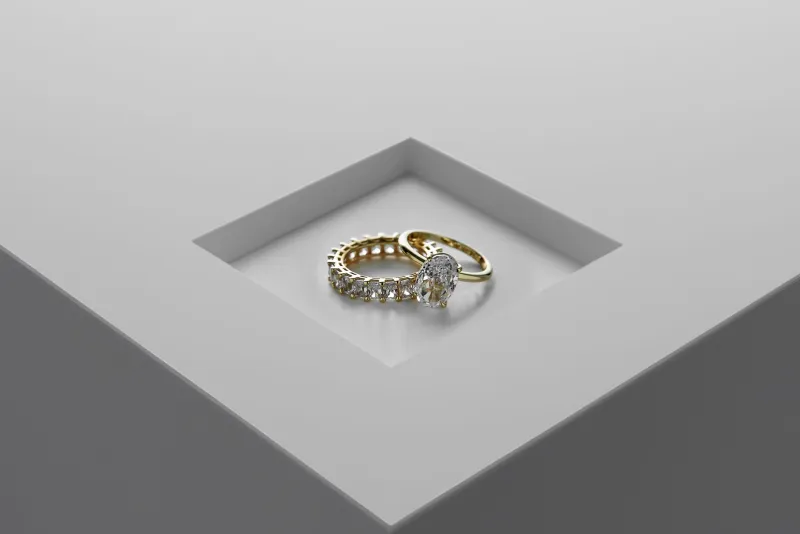
The collectors leading this movement are not novices overwhelmed by choice. They are individuals who have spent years — in some cases, decades — acquiring, studying, and living with fine jewelry. Their edited collections reflect a depth of understanding that no crowded jewelry armoire ever could. A single platinum solitaire worn daily communicates something profoundly different from a rotating carousel of statement pieces: it says the wearer knows exactly who she is.
This is the new grammar of luxury. Where excess once spoke of success, precision now speaks of mastery.
Sustainability and the Shifting Definition of American Luxury
The cultural context driving this shift extends well beyond aesthetics. American attitudes toward consumption have undergone a genuine reckoning in recent years, and the luxury sector has not been exempt. Concerns about ethical sourcing, environmental impact, and the carbon footprint of global supply chains have prompted even the most ardent collectors to reconsider the wisdom of accumulation for its own sake.
For many, the jewelry detox is inseparable from a broader commitment to conscious consumption. Owning fewer pieces — but ensuring that each one is ethically sourced, impeccably crafted, and genuinely meaningful — aligns personal values with purchasing behavior in a way that feels both modern and morally coherent. The Millennial and Gen X collectors now entering their peak earning years have grown up alongside conversations about sustainability; they are bringing those values into the jewelry market with real purchasing power behind them.
Fine jewelry, when chosen with genuine care, is inherently sustainable. A well-made piece in 18-karat gold or platinum does not wear out. It does not go to landfill. Passed from one generation to the next, it accumulates meaning rather than depreciation. The minimalist collector understands this intuitively: one extraordinary piece, worn for a lifetime, is a more responsible luxury than ten forgettable ones acquired in a season.
What Remains When You Remove Everything Unnecessary
For collectors undertaking a deliberate edit of their jewelry holdings, the process is rarely painless — and almost always illuminating. When every piece must justify its continued presence, the criteria shift. Sentimental value, aesthetic resonance, craftsmanship, and wearability all enter the calculus simultaneously. What survives this scrutiny is genuinely revealing.
Many collectors report that the edit exposes a surprisingly coherent personal aesthetic they had never consciously articulated. The pieces that remain tend to share qualities: a preference for a particular metal, a recurring attraction to a specific gemstone, a consistent inclination toward clean lines or, conversely, toward organic, sculptural forms. The reduced collection becomes, in effect, a self-portrait — more honest and more legible than anything a crowded collection could produce.
This clarity has practical benefits as well. Collectors who have completed a rigorous edit consistently report that they reach more easily for what they own, wear their finest pieces more regularly, and experience genuine daily pleasure from their jewelry rather than the low-grade guilt that often accompanies a collection grown beyond one's ability to engage with it meaningfully.
The Investment Logic of Fewer, Better Pieces
Beyond philosophy and aesthetics, there is a compelling financial argument for the minimalist approach. The resources redirected from acquiring many mid-tier pieces can instead be concentrated on acquiring fewer pieces of exceptional provenance, rarity, and quality — the kind of jewelry that holds, and frequently appreciates in, value over time.
A collector who might once have spent the same total sum across a dozen pleasant but unremarkable pieces might instead direct that capital toward a single signed piece from a celebrated atelier, or a natural colored gemstone of genuine rarity, or a vintage jewel with documented provenance. These are the acquisitions that reward patience, reward knowledge, and reward the willingness to wait for what is truly right rather than settle for what is immediately available.
The minimalist collector, in this sense, operates more like a serious art collector than a habitual shopper. Each acquisition is considered, researched, and deliberately chosen. The collection grows slowly — but it grows in a direction that matters.
Wearing Less With Greater Intention
Perhaps the most visible expression of this philosophy is the daily experience of wearing jewelry. The collector who owns twenty rings may wear none of them with particular conviction. The collector who owns two wears each one with absolute clarity of purpose.
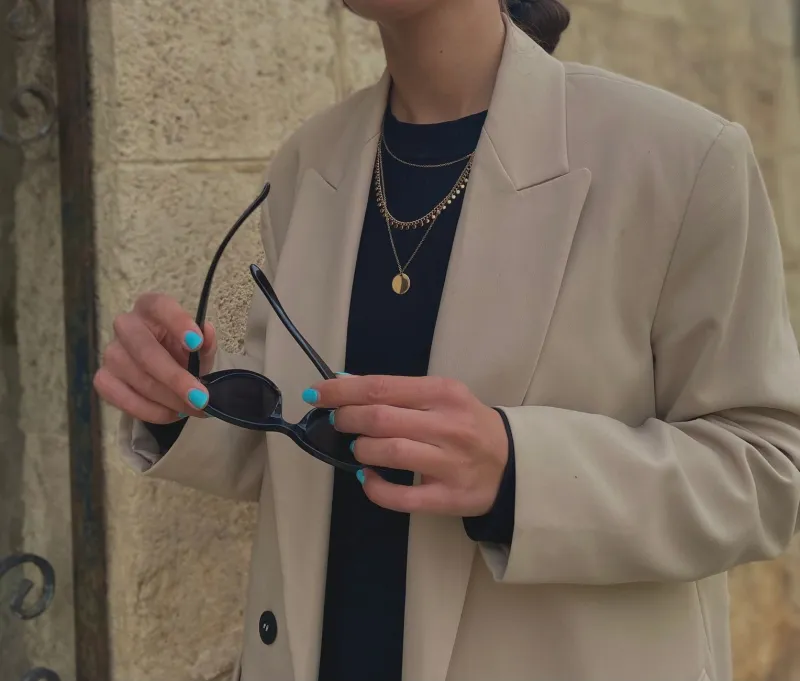
This intentionality transforms the experience of adornment. A single fine piece — a well-chosen bracelet in hammered gold, a pendant set with a stone of personal significance, a pair of earrings that frame the face in precisely the right way — commands attention in a manner that an armful of competing pieces never can. Restraint, it turns out, creates presence.
American style culture has long celebrated abundance and self-expression through layering and volume. But the most enduring style icons — both historical and contemporary — have typically shared a quality of edited certainty. They know what belongs on their bodies and what does not, and they have the confidence to leave the rest behind.
The New Connoisseurship
True connoisseurship has always been about knowledge, not accumulation. The collector who can articulate precisely why one piece of jewelry moves her — its cut, its provenance, its particular quality of light — demonstrates a sophistication that no quantity of acquisitions can manufacture.
The jewelry detox, at its core, is an act of connoisseurship. It demands honesty about what one genuinely loves versus what one acquired out of habit, opportunity, or social pressure. It requires the discipline to wait for what is truly right and the confidence to live comfortably with less in the interim.
In an era defined by conspicuous consumption, choosing to own less — and to own it beautifully — may be the most quietly radical statement available to the modern collector. It is a statement that requires no explanation, no display, and no audience. It speaks entirely for itself.