Rethink, Reclaim, Refine: A Thoughtful Approach to Editing Your Jewelry Collection
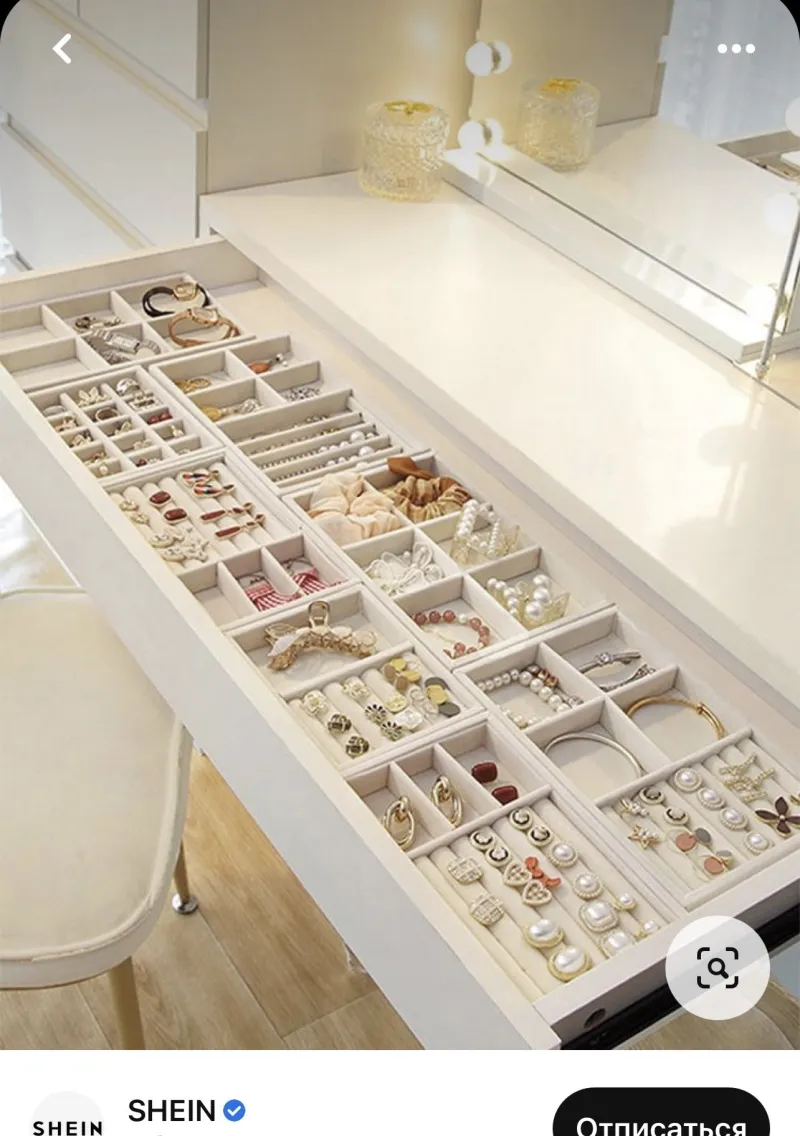
Photo: woman organizing fine jewelry collection on white surface, via i.pinimg.com
Most of us accumulate jewelry the way we accumulate books—enthusiastically, and with every intention of revisiting each piece. Yet a surprising number of fine necklaces, rings, and bracelets spend years in velvet-lined boxes, neither worn nor reconsidered. Editing your collection is not an act of loss. It is, instead, an opportunity to clarify what you actually love, recover money tied up in pieces you have outgrown, and make room—both physical and emotional—for the accessories that genuinely reflect who you are today.
The process requires honesty, a measure of patience, and a clear framework. What follows is a practical guide to conducting a meaningful jewelry audit.
Lay Everything Out Before You Judge Anything
Begin by removing every piece from its storage location—drawers, boxes, pouches, and the occasional forgotten dish on the bathroom counter—and arranging it on a clean, well-lit surface. This single act is often revelatory. Many owners discover duplicates they had forgotten about, broken pieces they intended to repair but never did, and items they cannot even identify as their own.
Handle each piece individually. Note its condition, its material, and—critically—your immediate emotional response to holding it. That instinctive reaction will be useful data as you move through the evaluation process.
Assess Quality and Condition Honestly
Before assigning any value—sentimental or financial—examine each piece with a critical eye. Look for hallmarks, which are small stamps indicating metal purity. In the United States, gold is typically marked 10K, 14K, or 18K, while sterling silver carries a 925 stamp. Unmarked pieces may still be valuable, but they require professional assessment.
Condition matters significantly when it comes to resale. A diamond solitaire with a bent prong or a bracelet with a broken clasp may have strong underlying value, but deferred repairs reduce what buyers are willing to pay. If you are considering selling, obtain a repair estimate first; the cost of restoration versus the likely resale price will inform your decision.
For pieces containing gemstones, consider whether the stones are natural, lab-grown, or simulants. Natural stones in fine settings from reputable designers hold the most resale potential. Costume jewelry, regardless of how stylish, rarely recovers its purchase price on the secondary market.
Separate Monetary Value from Emotional Worth
This is the most nuanced step, and the one most people rush through. A piece can carry enormous sentimental significance and minimal resale value—or the reverse. Conflating the two leads to poor decisions in both directions.
Create three informal categories as you work through your collection. The first is pieces with strong personal meaning: a grandmother's engagement ring, a charm bracelet that documents a decade of milestones, a necklace received during a significant life event. These belong in your collection regardless of market value, provided you actually wear them or intend to.
The second category encompasses pieces with clear monetary value but limited personal resonance—perhaps a substantial gold chain purchased as an investment, a designer piece acquired impulsively, or a gemstone ring that no longer suits your style. These are strong candidates for resale.
The third category is the most common: pieces with neither compelling emotional attachment nor meaningful financial value. These are candidates for donation or responsible recycling.
Exploring Resale: Where and How to Sell
If resale is the right choice for a piece, the American market offers several well-developed channels, each suited to different types of jewelry.
Consignment through established jewelers is often the most effective route for fine pieces, particularly signed designer work or antique jewelry. A reputable consignment jeweler will evaluate the piece, set a fair price, and manage the sale in exchange for a percentage—typically between 30 and 50 percent of the final sale price. The process is slower but tends to yield better returns for high-quality items.
Online resale platforms such as Worthy, I Do Now I Don't, and The RealReal have professionalized the secondary jewelry market considerably. Worthy, for instance, specializes in diamonds and conducts GIA-certified grading before auction, which adds credibility and often drives competitive bidding. The RealReal focuses on luxury and designer pieces, with authentication built into its process.
Local estate jewelers and pawnshops offer the fastest liquidity but typically at the lowest prices. If speed is a priority and the piece holds modest value, this may be acceptable. For anything of significant worth, it is worth the additional time to pursue better-yielding options.
Before listing anything, obtain at least two independent appraisals from certified gemologists—ideally those holding credentials from the Gemological Institute of America (GIA) or the American Society of Jewelry Appraisers (ASJA). An appraisal gives you a defensible baseline and prevents underpricing.
The Case for Charitable Giving
Not every piece needs to be sold. Many charitable organizations across the United States accept fine jewelry donations, which they convert to funding for their missions. Jewels for Good and Brides for a Cause are two well-known examples, but local organizations—hospice foundations, women's shelters, and community auctions—frequently welcome jewelry as well.
A donated piece may qualify as a charitable deduction on your federal tax return, provided you obtain a qualified appraisal for items valued above $500. Consult a tax professional for guidance specific to your situation. Beyond the financial benefit, there is something genuinely satisfying about knowing a piece you no longer wear is generating real impact.
What Deserves to Stay
After the sorting is complete, what remains in your collection should meet at least one of two criteria: you wear it, or it holds meaning significant enough that its presence in your life is justified even unworn. Heirloom pieces that connect you to family history, or a single exceptional ring that represents a chapter of your life, earn their place even in a drawer.
Everything else is inventory—and inventory has carrying costs, even if those costs are invisible. Clutter obscures the pieces you love most and makes getting dressed feel like an excavation rather than a pleasure.
A well-curated jewelry collection—smaller, more intentional, composed of pieces that genuinely resonate—is ultimately more valuable than a large one assembled without discernment. The audit is not a subtraction. It is a refinement.