No Ring Required: The Quiet Rise of the Self-Purchased Milestone Jewel
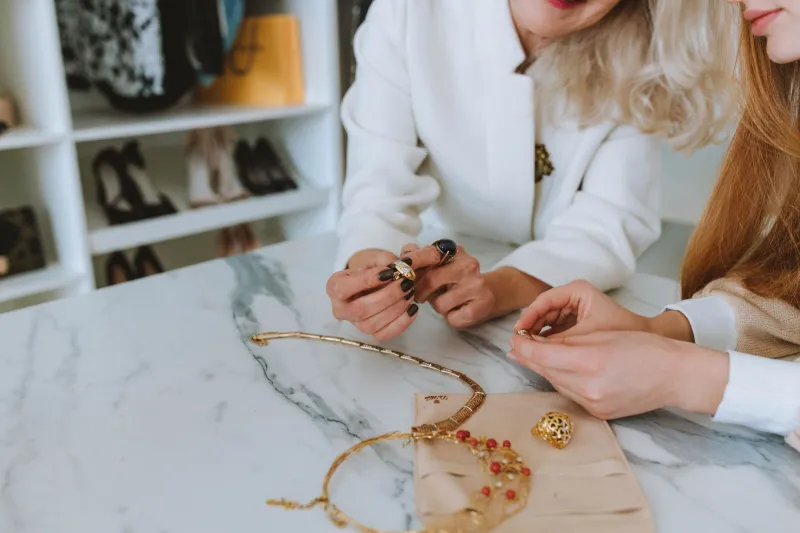
For most of the twentieth century, the script was familiar: significant jewelry arrived on bended knee, wrapped in a velvet box, presented by someone else. The engagement ring, the anniversary bracelet, the push present — the milestones of a woman's life were, by convention, commemorated by gifts from others. That script is quietly being rewritten. In jewelry counters from New York to Los Angeles, a growing share of fine jewelry is being purchased by women, for themselves, to mark achievements that have nothing to do with romance.
A Shift in Who Signs the Receipt
Walk into any independent jeweler in Austin or Chicago and ask what has changed in the last decade. The answer, almost universally, is the customer. Women now account for the majority of fine jewelry purchases in the United States, and their buying patterns look nothing like the traditional gift calendar. They are celebrating equity partnerships, closing funding rounds, finishing divorces, and turning forty with the same ceremonial weight once reserved for engagements.
The numbers bear this out. Industry analyses consistently show self-purchase as the fastest-growing segment of the American fine jewelry market, with women driving demand for pieces that signal something to themselves rather than to a partner. The rise of the 'right-hand ring' — once a marketing campaign, now a genuine cultural fixture — was only the beginning. Today's self-gifters are commissioning signet rings engraved with company founding dates, buying emerald studs to mark a first seven-figure quarter, and treating a finished divorce not as an ending to be mourned but as a milestone to be set in gold.
Why the Milestone Jewel Hits Different
There is a practical logic here that has little to do with sentimentality. A gift, however lovely, is a proxy — it says someone thought of you. A self-purchased piece says something more exacting: I decided this achievement deserved permanence, and I was willing to invest in that judgment. Psychologists who study ritual and material culture have long noted that tangible markers help the mind consolidate transitions. A promotion that exists only on a business card is easy to dismiss a year later. A sapphire ring worn every day makes the same argument on a loop.
There is also the matter of taste. Self-purchasers choose for themselves, which means the piece reflects their actual aesthetic rather than a partner's best guess. The result, anecdotally, is jewelry that gets worn more often and retained longer. Ask any estate buyer what holds value in the secondary market, and it is rarely the generic solitaire chosen under time pressure; it is the distinctive, well-made piece with a story attached.
Rewriting the Etiquette
The cultural residue of the old model persists, of course. Some women still report a flicker of guilt at the counter — the sense that significant jewelry is something one waits for. Jewelers have become adept at dismantling this. The better houses have stopped framing self-purchase as a consolation category and started treating it as the most sophisticated form of collecting: the client who knows precisely what she wants, with no one to negotiate with and no occasion to second-guess.
Critics of the trend — and they exist — argue that it commercializes personal achievement, that marking a milestone with a purchase is consumerism dressed as empowerment. It is a fair challenge, and the answer is not to deny it but to refine it. A milestone jewel is only meaningful if the milestone is. The piece is not the reward; it is the receipt. Women who buy impulsively to soothe a bad week are participating in a different transaction entirely, and it is worth being honest about the distinction.
What This Means for the Industry
For American jewelers, the self-purchase era demands a different posture. Marketing built around holidays and proposals misses the calendar these clients actually live by. Sizing, engraving, and bespoke services matter more, because the buyer is commissioning for herself. And the conversation at the counter has shifted from 'what does she like?' to 'what does this mean to you?' — a far better question, and one that produces far better jewelry.
The engagement ring is not going anywhere. But it no longer holds a monopoly on significance. In 2020s America, the most interesting jewelry stories are increasingly the ones women write for themselves — and the pieces they commission to prove it happened.