The New Luxury Standard: Why Transparency Has Become the Most Coveted Quality in Fine Jewelry

For most of jewelry's long history, the beauty of a finished piece was considered sufficient justification for its existence. Buyers admired the craftsmanship. They evaluated the stone. They negotiated the price. What happened before the piece arrived in a velvet-lined case was, by convention, someone else's concern.
That convention is dissolving — and its dissolution is being driven not by regulation alone, but by a fundamental shift in how American luxury consumers understand what they are actually purchasing when they invest in fine jewelry.
Today's most sophisticated buyers are asking questions that would have seemed unusual in a high-end jeweler's salon a decade ago. Where was this gold refined? Can you trace this diamond to its country of origin? What are the labor conditions at the facility that set this stone? These are not the questions of an activist. They are the questions of a discerning collector who understands that the story behind a piece is now inseparable from its value.
How We Arrived Here
The movement toward ethical transparency in luxury goods did not emerge overnight. It has been building for years, accelerated by a confluence of forces: documentary journalism exposing the human and environmental toll of industrial mining, the rise of digital platforms that make supply chain information accessible to consumers, and a generational shift in values among buyers who came of age with climate awareness baked into their worldview.
The Kimberley Process, established in the early 2000s to curtail the trade in conflict diamonds, was an early marker of the industry's recognition that provenance matters. But critics have long noted its limitations — it addresses armed conflict but does not speak to labor rights, environmental damage, or the broader social conditions in mining communities. The current demand for transparency goes considerably further.
American consumers, in particular, have demonstrated a willingness to pay a premium for verified ethical sourcing across multiple luxury categories, from fashion to wine to cosmetics. Fine jewelry is the logical next frontier, and the brands and designers who recognize this early are positioning themselves advantageously.
What Transparency Actually Means in Practice
The term "ethical jewelry" is used with varying degrees of rigor, and buyers would do well to understand the distinctions. Genuine transparency in the supply chain encompasses several distinct dimensions.
Metal sourcing is perhaps the most immediately actionable area. Recycled gold and platinum — recovered from electronics, industrial applications, and existing jewelry — carry a significantly lower environmental footprint than newly mined metals. Several American designers and a growing number of established houses now work exclusively or predominantly with recycled precious metals, and they document this provenance explicitly.
Gemstone traceability is more complex but increasingly achievable. Canadian diamonds, for instance, carry certificates of origin that trace them to specific mines operating under robust environmental and labor standards. Botswana-sourced diamonds from operations that reinvest in local communities represent another well-documented category. For colored gemstones, organizations such as the Responsible Jewellery Council are expanding their certification frameworks, though the colored stone trade remains more fragmented and requires more rigorous buyer inquiry.
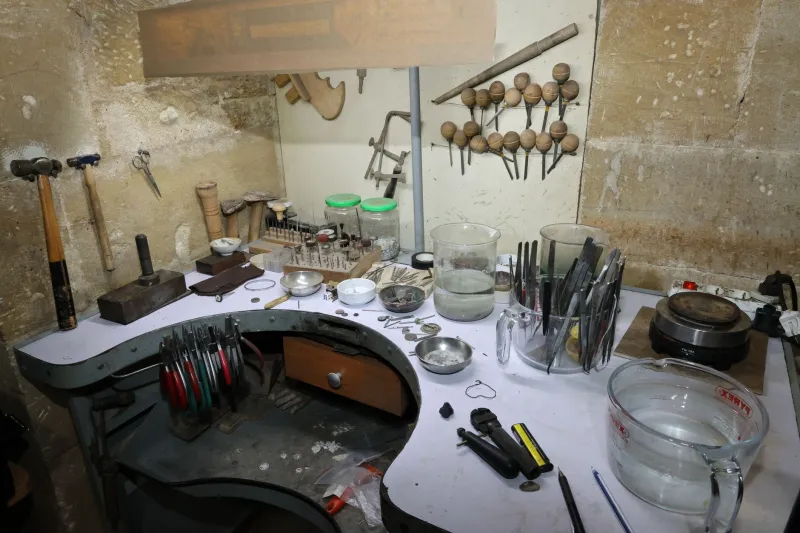
Labor conditions at every stage of production — from mining and cutting to casting and setting — are the dimension most difficult to verify independently, but also the one that resonates most deeply with values-driven consumers. Designers who manufacture in facilities they own or have directly audited are better positioned to offer genuine assurances than those who rely on extended, opaque supply chains.
The Collectors Who Are Leading This Shift
It would be a mistake to characterize the demand for ethical jewelry as a niche concern among a small activist subset. Market research consistently shows that values-aligned purchasing is mainstream among American consumers under fifty — including those with the disposable income to invest seriously in fine jewelry.
What is notable is the particular sophistication with which these collectors are approaching their purchases. They are not asking brands to be perfect. They are asking brands to be honest. The collector who understands that entirely impact-free jewelry production is not yet achievable at scale is not looking for a fiction. She is looking for a brand that can demonstrate genuine accountability, meaningful progress, and a willingness to engage with the complexity of the problem.
This represents a significant evolution in the buyer-brand relationship. The traditional luxury transaction was largely asymmetrical: the house presented, the customer acquired. The new transaction is more collaborative, more inquisitive, and considerably more demanding of documentation.
How to Evaluate a Brand's Ethical Claims
For collectors navigating this landscape, a practical framework is more useful than general principles. Several questions, asked directly of a jeweler or brand representative, will reveal quickly whether a commitment to transparency is substantive or cosmetic.
First, ask for specific certifications rather than general assurances. Responsible Jewellery Council membership, Fairmined gold certification, and specific country-of-origin documentation for gemstones are verifiable credentials. Language such as "responsibly sourced" or "ethically minded" without accompanying documentation should prompt follow-up questions.
Second, ask about the manufacturing process. Pieces made in the United States or in well-documented overseas facilities with independently audited labor practices carry a different level of accountability than those whose production chain is unclear.
Third, consider the brand's overall posture toward sustainability — not merely its marketing language. Brands that publish detailed impact reports, acknowledge areas where they are still working toward improvement, and engage substantively with industry-wide challenges tend to be more credible than those whose ethical messaging is confined to aspirational imagery.
Transparency as an Aesthetic
There is something quietly beautiful about a piece of jewelry whose entire biography is known and documented. A ring cast from recycled gold, set with a Fairtrade-certified gemstone, made by a craftsperson whose working conditions are verified — this piece carries a different kind of weight than one whose origins are obscure. It is complete in a way that extends beyond its physical properties.
This is, perhaps, the most compelling argument for the transparency movement: it does not diminish the luxury experience. It deepens it. The collector who knows exactly where her piece came from, and who can be confident that its creation did not come at an unjust human or environmental cost, wears it with a particular kind of ease that is its own form of elegance.
At BijOnline, we believe that the most exquisite jewelry is jewelry that can bear scrutiny at every level — aesthetic, material, and ethical. As the industry continues to evolve, transparency is not a constraint on luxury. It is its most contemporary expression.