When the Heirloom Doesn't Fit: Navigating Inherited Jewelry That Falls Outside Your Aesthetic
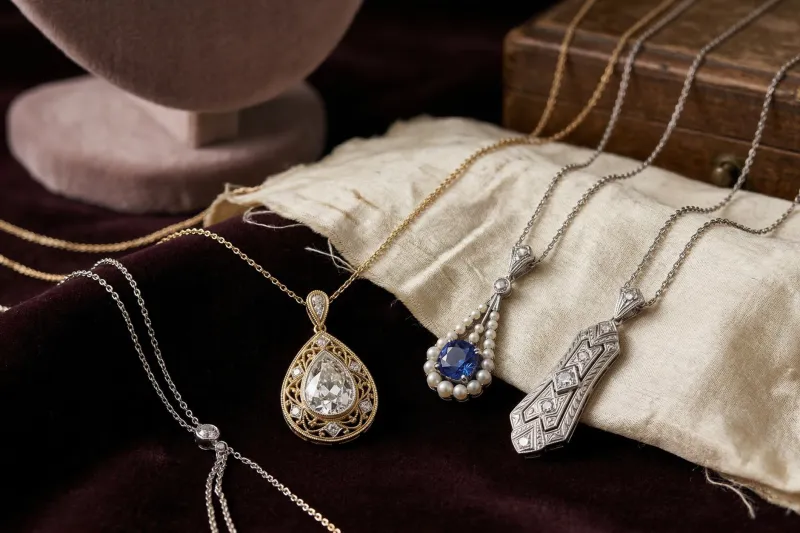
Grief arrives in unexpected forms. Sometimes it arrives as a small velvet box, passed across a table by an estate attorney or pressed into your hands by a relative with kind intentions. Inside is a piece of jewelry that belonged to someone you loved — and that you have absolutely no idea what to do with.
Perhaps it is a cocktail ring of the sort that was fashionable in a different era, its oversized stones set in a style that feels entirely foreign to your own. Perhaps it is a brooch that your grandmother wore with every winter coat, beautiful in its own right but categorically incompatible with the way you dress. Perhaps it is a necklace heavy with sentiment and equally heavy with diamonds arranged in a configuration that has never appealed to you.
The jewelry is meaningful. The love behind it is real. And yet, you cannot imagine wearing it.
This is one of the most common — and least discussed — dilemmas in the world of fine jewelry, and it deserves a response more nuanced than either forced gratitude or quiet guilt.
The Weight of Obligation
Before exploring any practical path forward, it is worth acknowledging the emotional terrain honestly. Inherited jewelry arrives freighted with expectation — sometimes explicit, sometimes merely assumed. There is a cultural script in many American families that treats heirloom pieces as objects to be worn, displayed, and eventually passed along in their original form, as though any alteration or departure constitutes a betrayal of the person who owned them.
This script, however well-intentioned, can be quietly harmful. It assigns to an object a kind of authority over your choices that the person who left it to you may never have intended. Most people who leave jewelry to their loved ones want that jewelry to be treasured — which is to say, actually worn and genuinely valued. A piece that sits in a drawer for decades because the recipient felt too guilty to address it is not being honored. It is simply being avoided.
Recognizing this distinction — between the person's love and the object through which it was expressed — is the first and most important step toward a resolution that serves everyone, including the memory of the person who left the piece.
Option One: Reimagine the Piece
For many collectors, the most satisfying resolution to an aesthetic mismatch is transformation rather than departure. A skilled jeweler can do remarkable things with inherited stones and metals — disassembling a dated setting and reinterpreting its components into something entirely contemporary, while preserving every gram of the original material.
A cluster of diamonds from a 1970s cocktail ring might be reconfigured into a sleek modern pendant. The stones from a brooch might become the centerpiece of a ring designed specifically to suit your hand. Yellow gold components can frequently be refined and recast in white gold or rose gold if that better reflects your preferences. The original piece ceases to exist in its former form, but its material substance — and, one might argue, its essential identity — continues.
This approach works best when the stones or metal themselves are of meaningful quality. Before commissioning any transformation, have the piece evaluated by a gemologist to understand what you are working with. A professional assessment will clarify whether the stones are natural or synthetic, what their quality grades are, and what the metal content and weight actually represent in terms of intrinsic value. This information will also inform any conversation with a custom jeweler about what the reimagined piece might cost and what it might ultimately be worth.
Option Two: Wear It Differently
Not every aesthetic mismatch requires structural intervention. Sometimes a piece simply needs to be encountered in a new context — styled in a way its original owner never considered, or worn in combination with contemporary pieces that reframe its visual character.
A Victorian mourning brooch, for example, might feel funereal in isolation but striking when pinned to a lapel alongside a modern suit. A heavy gold chain of the sort that reads as dated on its own might become entirely compelling when layered with finer, more contemporary pieces. Vintage earrings that seem overwrought for everyday wear might be precisely right for a specific type of occasion.
Before concluding that a piece is unwearable, it is worth spending time with it — trying it in different combinations, consulting with a stylist who specializes in fine jewelry, or simply wearing it privately for a period to see whether familiarity changes your perception. Aesthetic responses are not always immediate, and they are rarely permanent.
Option Three: Respectful Transition
There are circumstances in which no amount of reimagining or restyling resolves the fundamental incompatibility between an inherited piece and the person who received it. In those cases, the most honest path forward may be to transfer the piece to someone who will genuinely love it — whether through a family arrangement, a consignment sale, or an auction.
This option carries the heaviest emotional charge, and it should be approached with corresponding care. If other family members exist who might have a stronger personal connection to the piece, a conversation about redistribution is almost always worth having before any external sale is considered. Heirloom jewelry that finds its way to a cousin or sibling who will wear it with genuine affection has not been lost — it has simply found its rightful home.
When a sale is the appropriate resolution, collectors should pursue it through channels that reflect the quality of the piece. A significant estate jewel deserves evaluation by a reputable auction house — Christie's, Sotheby's, Bonhams, and Heritage Auctions all maintain dedicated jewelry departments — rather than a hasty transaction through a generic resale platform. The proceeds, if retained, might be directed toward a new acquisition that reflects your own aesthetic — a purchase that carries its own layer of meaning as an act of self-knowledge.
Honoring the Person, Not Just the Object
The most important reframe available to anyone navigating this situation is this: the love embedded in an heirloom is not contained within the physical object. It exists in the relationship, in the memories, in the stories attached to the piece — none of which disappear if the brooch is redesigned or the ring is sold.
Documenting the piece before any decision is made — photographing it carefully, recording its history, writing down whatever you know about when and how it was worn — preserves the narrative independent of the object. That documentation, stored alongside your jewelry records or shared with other family members, honors the piece's history in a way that a guilt-laden drawer never could.
At BijOnline, we believe that a collection should be a reflection of the person who builds it — layered with meaning, yes, but also with genuine personal resonance. Inherited pieces can absolutely contribute to that vision. But they do so most powerfully when they are engaged with honestly, not merely tolerated out of obligation. The goal is not to own every piece you have ever received. It is to know, deeply and deliberately, which ones truly belong with you.