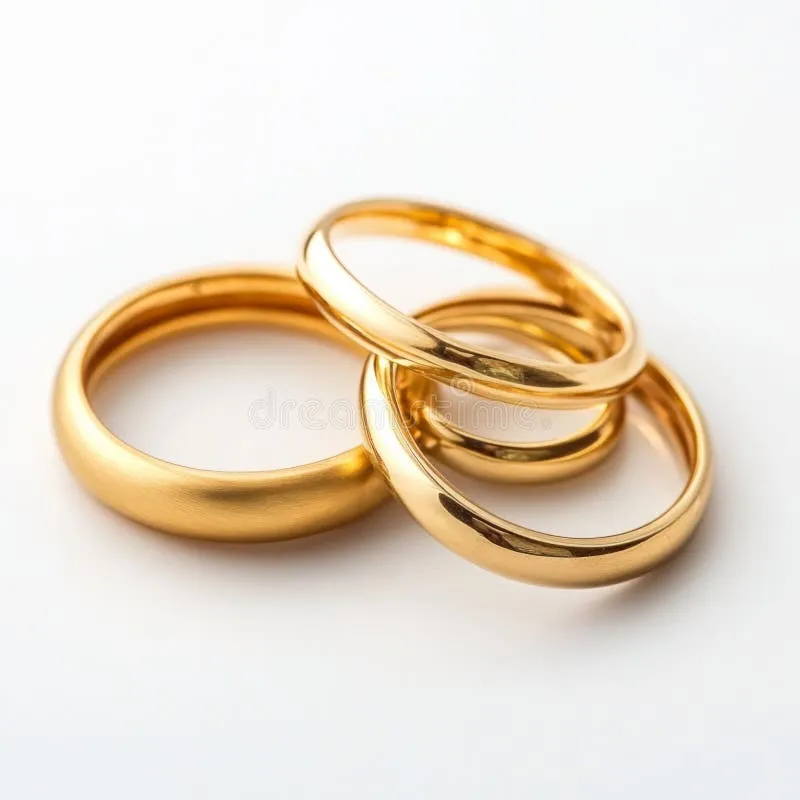
When Your Jewelry No Longer Knows Your Name: Recognizing the Moment for a Complete Collection Reimagining

Photo by Photo by LUM3N on Unsplash on Unsplash
There is a particular kind of dissonance that seasoned jewelry wearers know well. You open the drawer, survey the pieces you once adored, and feel — nothing. Not dissatisfaction, exactly. Something quieter and more unsettling: estrangement. The gold bangle you wore every day for three years sits untouched. The layered necklace that once felt like armor now feels like costume. Something has shifted, and the jewelry has not kept pace.
This is not a failure of taste. It is, in fact, evidence of growth. And it signals something worth paying close attention to: the possibility that your collection has become a portrait of who you were rather than a reflection of who you are becoming.
The Life Moments That Quietly Rearrange Everything
Jewelry is among the most intimate of all personal objects. Unlike clothing, which is replaced seasonally almost by obligation, fine jewelry tends to accumulate with intention — each piece acquired at a specific moment, for a specific reason, often tied to a specific version of yourself. This is precisely why certain life transitions carry the power to render an entire collection suddenly, profoundly irrelevant.
A career pivot — from corporate attorney to independent creative, from academic to entrepreneur — does not simply alter your wardrobe requirements. It reshapes the visual language you use to move through the world. The structured gold earrings that projected authority in a boardroom may feel incongruous beside the person you are becoming in a studio or a startup. The jewelry you wore as a signal of institutional belonging may now feel like a uniform you have quietly resigned from wearing.
Relationship changes carry an equally significant weight. The end of a long partnership, the beginning of a meaningful new one, or even the deepening of a relationship with oneself following a period of personal reckoning — each of these transitions leaves a mark on how we wish to be seen and how we choose to adorn ourselves. Pieces acquired as part of a shared identity can feel like they belong to a chapter that has genuinely closed.
Personal awakenings — spiritual shifts, health transformations, geographic relocations, or simply the quiet accumulation of self-knowledge that arrives in one's late thirties or forties — can be equally decisive. The woman who relocates from Manhattan to Santa Fe, or the man who steps away from a decade of corporate performance to pursue something more authentic, often finds that the jewelry collected along the previous path no longer speaks to the life now being built.
Distinguishing Boredom from a Genuine Signal
Not every moment of indifference toward your jewelry warrants a full reimagining. Aesthetic fatigue — a temporary disenchantment born of overexposure — is a real and common experience, and it resolves itself. The distinction lies in the nature of the feeling.
Boredom tends to be generalized and restless. It whispers that you need something new, something different, something stimulating. A genuine collection reset, by contrast, is specific and clarifying. It does not say I want more. It says these particular pieces no longer belong to the life I am living. The feeling is less about desire and more about misalignment — a quiet but persistent sense that the jewelry you own is telling a story you have already finished telling.
Ask yourself: When you reach for a piece, is there a moment of recognition — a small affirmation that this is yours, that it belongs on your body today — or has that moment ceased to arrive? When you wear something from your collection in public, does it feel like self-expression, or does it feel vaguely like pretense? These are not trivial questions. They are the kind that, answered honestly, reveal whether a reset is appropriate or whether patience is simply called for.
Reframing the Reset as an Act of Self-Respect
American culture has an ambivalent relationship with letting go. There is a tendency to frame the decision to part with valued possessions — particularly those with sentimental histories — as loss, as ingratitude, or as a kind of disloyalty to the past. This framing does a disservice to the deeper intelligence at work when a person decides to reimagine their collection.
A jewelry reset is not a repudiation of who you were. It is an acknowledgment of who you are. It reflects a willingness to be honest about the present rather than curated by the past. In this light, the act of setting aside pieces that no longer serve you is not a purge — it is an edit, undertaken with the same deliberateness a skilled author brings to revision. The story becomes truer, not diminished, when the superfluous is removed.
This reframing matters because it changes the emotional register of the entire process. Approached with self-respect rather than guilt, a collection overhaul becomes something to be undertaken thoughtfully, even ceremonially — not rushed through in an afternoon of frustration.
A Practical Framework for What Stays, What Transforms, What Departs
Once you have recognized that a reset is warranted, the question of method arises. The following framework offers a starting point for navigating the process with clarity.
What Stays: A piece earns its continued place in your collection if it meets two conditions simultaneously — it reflects who you are now, and it serves the life you are actively living. This is not about financial value or sentimental history alone. A piece can be extraordinarily valuable and yet no longer belong to your present self. Conversely, a modest piece of modest origin may carry precisely the resonance your current chapter requires. Let current relevance, not past attachment, be the primary criterion.
What Transforms: Some pieces occupy a middle territory — they carry meaning you are not prepared to release, but in their current form, they no longer suit the person you have become. These are candidates for transformation rather than departure. Resetting a stone into a new setting, reworking a heavy chain into something more refined, or repurposing the metal from a piece you no longer wear into something entirely new — these are all legitimate and often deeply satisfying options. Consult with a skilled jeweler about what is possible before assuming that departure is the only path.
What Departs: Some pieces simply belong to a chapter that has closed, and the most respectful thing you can do — both for the piece and for yourself — is to allow them to move on. Selling through a reputable estate jeweler or auction house, gifting to someone for whom the piece carries genuine meaning, or donating to an organization that places jewelry thoughtfully are all dignified options. The goal is not disposal but transition — allowing the piece to find its proper home in a new story.
The Collection That Waits on the Other Side
What emerges from a thoughtful reset is not simply a smaller or different collection. It is a more coherent one — a gathering of objects that, taken together, constitute a genuine self-portrait. Every piece present has been chosen consciously, held up against the light of who you currently are, and found worthy of remaining.
This kind of collection has a different quality than one assembled purely through accumulation. It feels intentional. It feels alive. And when you reach into it each morning, the moment of recognition — that quiet affirmation that the piece is yours, that it belongs to you today — returns.
That moment is worth pursuing. And recognizing when your collection has lost it is the first, most essential step toward getting it back.