The Collector's Pause: How Stepping Back From Buying Deepens the Art of Owning
There is a particular kind of discipline that separates a seasoned collector from an enthusiastic accumulator. It is not the size of the budget, nor the prestige of the labels represented in a jewelry armoire. It is, rather, the willingness to stop — deliberately, consciously, and without apology — and simply sit with what one already owns.
This practice, which collectors and stylists have quietly begun calling the "jewelry pause," is neither a financial concession nor a sign of waning interest. It is, in fact, one of the more sophisticated moves a collector can make. And increasingly, it is being embraced by some of the most refined jewelry enthusiasts across the country.
What the Pause Actually Means
To understand the jewelry pause, it helps to first dispel what it is not. It is not the absence of desire. It is not a reaction to overspending, though it may coincide with a period of financial mindfulness. And it is certainly not disengagement from the world of fine jewelry and bijoux.
A true collecting hiatus is an intentional moratorium on acquisition — a defined period during which a collector makes a conscious choice to refrain from purchasing new pieces. The distinction between a pause and mere avoidance lies entirely in purpose. Avoidance is passive; the pause is active. One drifts away from the jewelry counter; the other walks away with full awareness and a clear objective.
The goal of this practice is threefold: to deepen familiarity with existing pieces, to allow aesthetic preferences time to clarify, and to cultivate the kind of discernment that makes the next acquisition — whenever it comes — genuinely meaningful.
The Problem With Perpetual Acquisition
American consumer culture tends to reward continuous buying. Newness is celebrated, and the thrill of the next discovery is well understood. In the jewelry world specifically, the market is perpetually generous with temptation — limited-edition releases, seasonal collections, auction discoveries, and the ever-expanding landscape of independent designers all conspire to keep a collector's attention perpetually forward-facing.
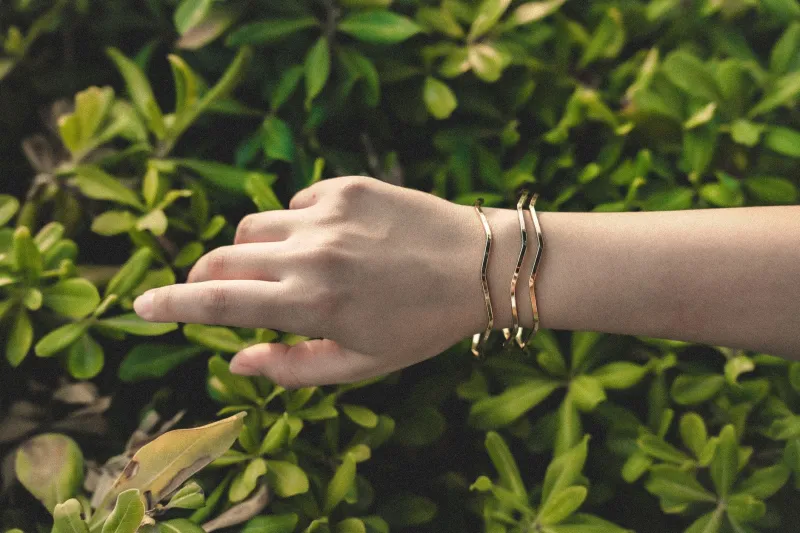
But this forward momentum carries a cost. When the focus is always on what comes next, the pieces already in one's possession are quietly demoted. A cuff bracelet worn twice and then forgotten. A pendant purchased with great intention that has since been buried beneath newer acquisitions. A pair of earrings whose particular quality of light has never truly been appreciated because the wearer's attention was already fixed on the next object of desire.
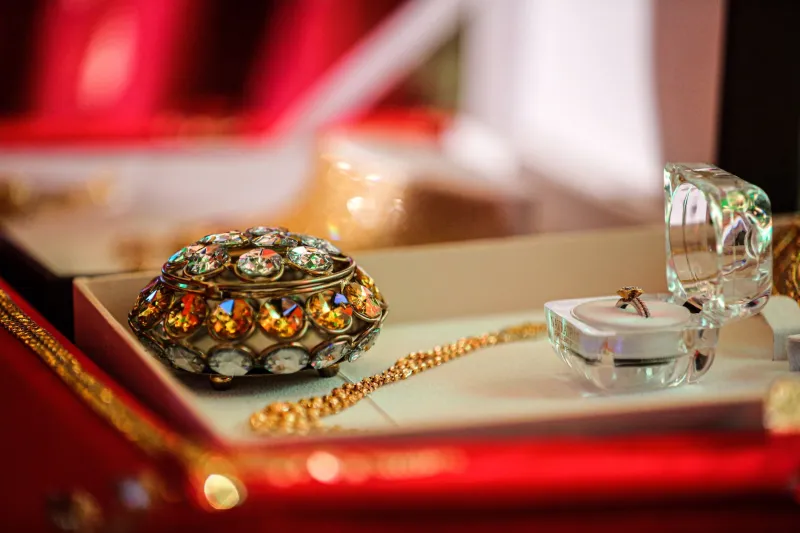
The jewelry pause interrupts this cycle. It turns the gaze inward — toward the velvet-lined drawers, the leather roll, the heirloom box — and asks a collector to rediscover what is already there.
Rediscovering What You Already Own
There is a particular pleasure in returning to a piece with fresh eyes. Collectors who have undertaken extended hiatuses frequently report a kind of rediscovery — noticing, perhaps for the first time, the way a particular gold catches afternoon light, or the unexpected versatility of a ring they had long considered strictly formal.
This renewed attention does more than simply increase the utility of existing jewelry. It builds what might be called an intimate vocabulary between collector and collection. You begin to understand not just what you own, but why you own it — the emotional logic that governs your choices, the recurring motifs and materials that define your aesthetic, the gaps that are genuine versus those manufactured by momentary desire.
Many collectors find that a pause of even sixty to ninety days is sufficient to fundamentally shift their relationship with their existing pieces. Jewelry that once felt peripheral suddenly feels essential. Combinations that never occurred to them begin to present themselves naturally.
Clarifying Aesthetic Direction
One of the less obvious benefits of a collecting hiatus is the clarity it brings to future decisions. When a collector is in continuous acquisition mode, preferences are constantly being formed and reformed in real time, often under the influence of marketing, trend cycles, or the simple excitement of a beautiful new object. The result can be a collection that feels somewhat scattered — beautiful in its individual parts, but lacking a coherent identity.
The pause creates distance. And distance, in matters of taste, is extraordinarily useful.
Without the noise of active shopping, a collector can ask more fundamental questions. What is it that I am actually drawn to? Do I gravitate toward sculptural statement pieces or toward the quiet authority of understated fine jewelry? Am I building a collection that reflects who I am today, or one that reflects who I once imagined I might become?
These are not questions that can be answered at a jewelry counter. They require stillness, and the pause provides it.
The Discipline of Restraint as a Luxury in Itself
There is something quietly radical about choosing not to buy in a culture that equates consumption with connoisseurship. But the collectors who practice the pause tend to view restraint not as deprivation, but as its own form of luxury — a luxury of attention, of patience, of refined judgment.
This perspective aligns with a broader shift visible among discerning collectors across the country. The most thoughtful among them are moving away from the idea that a collection's value is measured by its volume. Instead, they are embracing a more edited philosophy: fewer pieces, but each one chosen with greater intention and worn with greater frequency.
The pause is, in this sense, not a break from collecting. It is an intensification of it.
Knowing When the Pause Is Over
A well-observed hiatus does not end arbitrarily. The collector who has used their pause productively — deepening their relationship with existing pieces, clarifying their aesthetic direction, and developing genuine patience — will find that the right moment to re-enter the market announces itself with unusual clarity.
The desire that emerges after a considered pause is qualitatively different from the desire that drives impulse purchases. It is specific rather than general, earned rather than reactive. A collector who has spent three months in deliberate dormancy does not return to the market looking for something. They return looking for one particular thing — and they are far better equipped to recognize it when it appears.
This is, perhaps, the deepest purpose of the pause: not to diminish the joy of acquisition, but to restore it to its proper weight. To ensure that each piece added to a collection is added with the full force of considered desire, rather than the pleasant but fleeting excitement of novelty.
A Practice Worth Considering
For collectors accustomed to the rhythm of continuous discovery, the idea of a deliberate hiatus may initially feel uncomfortable. That discomfort is, in itself, informative.
The jewelry pause is not for everyone, and no particular duration suits every collector's circumstances. But for those who sense that their collection has grown faster than their understanding of it — or who feel that the pleasure of their pieces has been diluted by the sheer pace of acquisition — the practice offers something genuinely valuable.
Sometimes the most elegant thing a collector can do is simply stop, look down at what rests in their own hands, and allow themselves to be fully present with the beauty already in their possession.