Three Numbers, One Piece of Jewelry: Understanding the Valuations That Every Serious Collector Must Know
There is a quiet assumption that runs through much of American jewelry ownership: that the number printed on an appraisal certificate is, in some meaningful sense, what the piece is worth. It arrives in a leather folio, signed by a credentialed professional, and it carries the satisfying weight of official documentation. Many collectors file it away with their insurance records and consider the matter settled.
It is not settled. In fact, that single figure may be the least useful number associated with the piece — depending entirely on what you intend to do with it.
The world of jewelry valuation is not a single conversation. It is three separate ones, each conducted in a different context, each arriving at a dramatically different conclusion. The discerning collector understands this not as a technicality, but as foundational knowledge.
The Number That Protects You: Insurance Replacement Value
The figure most commonly found on standard appraisal documents is the insurance replacement value — sometimes called the retail replacement value. This is the amount an insurer would need to pay for you to acquire a comparable piece from a retail jeweler, at current market prices, should your original be lost, stolen, or destroyed.
By design, this number is generous. It accounts for retail markup, geographic pricing variation, the cost of custom fabrication if the piece is rare, and a margin of cushion to ensure you are made whole. For a diamond solitaire engagement ring purchased a decade ago, the insurance replacement value today might be substantially higher than the original purchase price — reflecting both inflation and the upward movement of diamond markets.
This is the valuation you need. But it is not the only one you need, and treating it as a universal measure of worth is where many collectors make their first significant error.
The Number That Humbles You: Fair Market and Resale Value
Fair market value is the figure an informed, willing buyer would pay an informed, willing seller — with neither party under any compulsion to transact. In practice, for most jewelry, this number is considerably lower than the insurance replacement value. For some categories of pieces, it is startlingly so.
The resale market for jewelry is not kind to retail markups. A diamond purchased from a fine jeweler for $8,000 may carry an insurance replacement value of $10,000 — and a resale value, through a reputable estate jeweler or auction house, of $3,500 to $5,000. The difference is not a reflection of the stone's quality. It is a reflection of the economics of the secondary market, where wholesale diamond prices, dealer margins, and buyer expectations all compress the number significantly.
Collectors who understand this dynamic approach their acquisitions differently. They seek pieces — estate jewelry, signed designer work, gemstones with exceptional provenance — where the secondary market value holds more robustly. They also hold fewer illusions about liquidation scenarios, which is itself a form of financial intelligence.
The Number That Informs You: Liquidation Value
A third valuation, less commonly discussed but critically important in estate planning and divorce proceedings, is the forced or orderly liquidation value. This represents what a piece would realistically bring if sold quickly — through an estate sale, a dealer buyout, or an expedited auction process. It is, in almost every case, the lowest of the three figures.
Understanding liquidation value is not pessimistic. It is practical. For collectors building a jewelry wardrobe with any intention of eventual transfer — whether to heirs, to charity, or through sale — knowing this number provides clarity that no amount of sentimental attachment can substitute.
Selecting an Appraiser Who Serves Your Interests
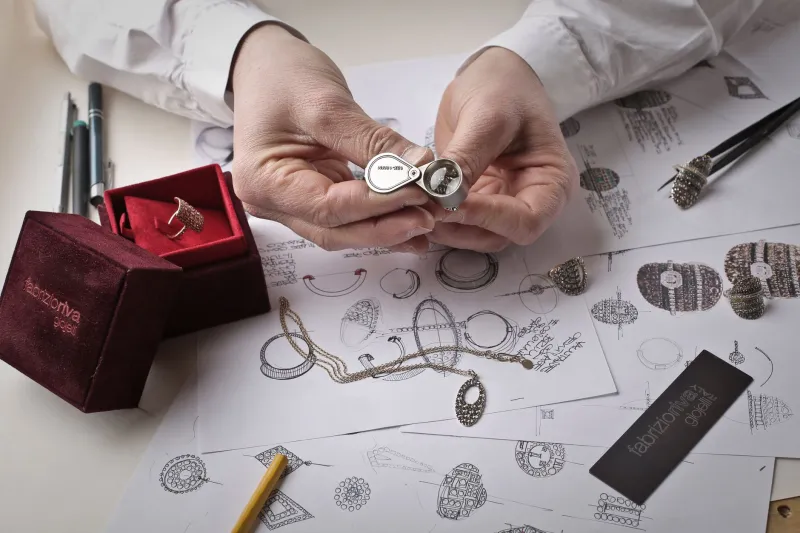
Not all appraisers are equivalent, and the credential landscape in the United States requires some navigation. The most widely recognized qualification is the GIA Graduate Gemologist designation, issued by the Gemological Institute of America. The American Society of Jewelry Appraisers (ASJA) and the American Gem Society (AGS) also confer respected credentials.
Critically, seek an appraiser who operates independently of any retail sales operation. A jeweler who appraises pieces they also sell carries an inherent conflict of interest — one that tends, unsurprisingly, to inflate values. An independent appraiser, compensated by flat fee rather than a percentage of the assessed value, has no financial incentive to misrepresent the figure in either direction.
For significant pieces — anything with a replacement value exceeding $5,000, or any item with gemological complexity — consider requesting both an insurance appraisal and a fair market appraisal from the same qualified professional. The contrast between the two figures will tell you more about your piece than any single document could.
How Often Should Appraisals Be Refreshed?
The jewelry market is not static. Diamond prices, colored gemstone valuations, and the premium attached to signed designer pieces all fluctuate with broader economic conditions, shifting collector tastes, and supply dynamics. An appraisal completed in 2015 may significantly understate — or in some categories, overstate — current replacement costs.
The general guidance among estate planning professionals and insurance specialists is to update appraisals every three to five years for actively worn pieces, and following any significant market event that affects the primary gemstone categories in your collection. If you hold substantial colored gemstone holdings — sapphires, rubies, or Colombian emeralds, for instance — you may wish to refresh valuations more frequently, as these markets can move meaningfully within shorter windows.
Documentation as a Form of Stewardship
There is a broader principle at work beneath the technical details of appraisal methodology: documentation is stewardship. The collector who maintains current, multi-valuation appraisals for their significant pieces is not simply protecting against loss. They are creating the foundation for informed decision-making — about insurance coverage levels, estate planning designations, potential sales, and the eventual transfer of pieces to the next generation.
Knowledge of what your jewelry is truly worth, in each of its distinct financial contexts, is not merely practical. At BijOnline, we believe it is one of the more elegant expressions of what it means to own beautiful things thoughtfully.