The Silent Inventory: What an Untouched Jewelry Collection Is Trying to Tell You
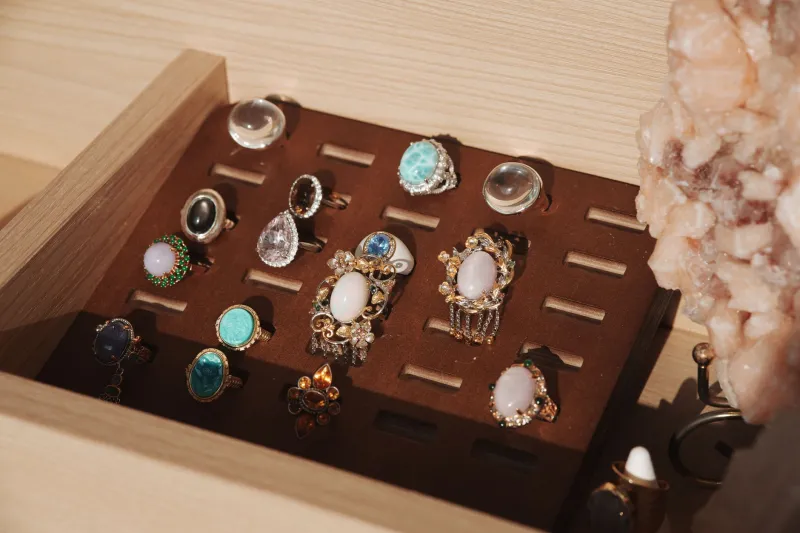
There is a particular kind of jewelry drawer that exists in a great many American homes — one that opens with a faint sense of guilt. Inside, bracelets rest in tangles, earrings have lost their partners, and rings purchased with tremendous enthusiasm sit in velvet pouches, untouched for years. The collection is not small. It is simply silent.
For serious collectors and casual admirers alike, this silence carries meaning. The gap between what we own and what we actually wear is rarely accidental. It is, in fact, one of the more revealing indicators of how our aesthetic sensibilities, lifestyles, and emotional relationships with objects have shifted over time. Understanding that gap — rather than perpetually deferring it — is among the most valuable exercises a jewelry owner can undertake.
Why We Hold On: The Psychology of Unworn Jewelry
Behavioral researchers who study material attachment consistently find that jewelry occupies a uniquely charged category among personal possessions. Unlike furniture or clothing, jewelry is almost always acquired in a moment of heightened emotion: a celebration, a milestone, a gift from someone we love, or a spontaneous act of self-reward. These emotional origins make pieces extraordinarily difficult to release, even when they no longer serve any practical or aesthetic purpose.
"The object itself becomes a stand-in for the memory," explains one consumer behavior consultant who works with high-net-worth clients in New York. "People fear that letting go of the piece means letting go of the experience it represents. Rationally, they know that's not true. Emotionally, the equation is far more complicated."
This phenomenon is compounded by what psychologists term the endowment effect — the tendency to assign greater value to something simply because we own it. A ring that cost four hundred dollars feels worth considerably more once it is ours, regardless of whether we ever wear it again. This inflated sense of worth keeps pieces anchored in drawers long past their welcome.
The Practical Audit: Moving Beyond Sentiment
Jewelry consultants who specialize in collection management suggest a structured, two-phase approach to evaluating unworn pieces — one that honors emotional context without being held hostage by it.
Phase One: The Honest Inventory
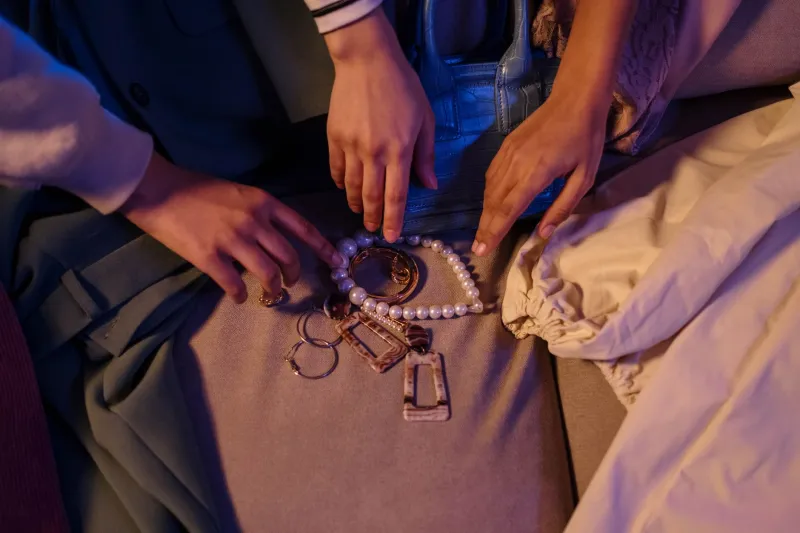
Begin by removing every piece from storage and placing it in full view. This act alone is instructive. Many collectors report genuine surprise at what they find — pieces they had forgotten entirely, duplicates of styles they already own, and items that feel entirely foreign to who they are today. Lay everything out on a neutral surface, ideally in good natural light, and spend time simply observing before making any decisions.
For each piece, ask a specific set of questions: When did I last wear this? What occasion would realistically prompt me to wear it again? Does it reflect how I present myself now, or how I once did? Is it in wearable condition, or would it require restoration before use?
The answers will begin to sort themselves into clear categories without requiring any forced judgment.
Phase Two: The Honest Reckoning
Once the inventory is complete, the more nuanced work begins. Consultants recommend dividing pieces into three groups: those that belong in active rotation, those that hold genuine sentimental value and merit preservation regardless of wear frequency, and those that belong to neither category.
It is this third group that deserves the most careful attention. These are the pieces that were purchased impulsively, received without enthusiasm, or simply outgrown as your personal style matured. They are not failures. They are evidence of a collector in motion — someone whose eye has developed and whose preferences have sharpened.
Sentimental Value vs. Actual Value: A Necessary Distinction
One of the most common pitfalls in collection management is conflating sentimental attachment with the decision to keep a piece indefinitely. These are not the same consideration, and treating them as such leads to collections that grow unwieldy and emotionally exhausting to maintain.
A piece can carry real sentimental significance and still be better honored in the hands of someone who will wear it with genuine affection. A grandmother's brooch, for instance, may hold tremendous family meaning — but if it sits perpetually in a box because its style does not align with your wardrobe, one might consider whether a cousin, a daughter, or a close friend might carry that meaning forward more actively.
"Rehoming a piece thoughtfully is not abandonment," notes a fine jewelry advisor based in Chicago who works with estate collections. "It is, in many ways, the most respectful thing you can do for an object that was meant to be worn and admired."
This perspective reframes the conversation around unworn jewelry entirely. Rather than viewing the audit as an act of loss, it becomes an act of stewardship — ensuring that each piece finds its proper context, whether that remains with you or moves elsewhere.
What the Drawer Is Actually Revealing
Beyond individual pieces, the composition of an untouched collection tells a broader story about collecting habits worth examining. A drawer full of impulse purchases suggests a need to introduce more deliberation into the acquisition process. An accumulation of gifted pieces that don't suit your taste may signal that the people in your life would benefit from clearer guidance about your preferences. A collection heavy with trend-driven items that now feel dated points toward a recalibration toward more enduring, classic forms.
These are not criticisms. They are data points — and experienced collectors treat them as such. The most discerning jewelry owners in America are those who have learned to read their own collections as honestly as they read the market, understanding that each piece either earns its place or it does not.
Building a Collection That Earns Its Keep
The ultimate goal of a collection audit is not minimalism for its own sake. It is clarity. A smaller, cohesive collection of pieces that genuinely reflect your identity, serve your lifestyle, and bring you authentic pleasure every time you open that drawer is an infinitely more satisfying proposition than a sprawling inventory of objects weighted with obligation.
Once the silent pieces have been addressed — kept with renewed intention, passed along with care, or responsibly sold — the collection that remains will feel meaningfully different. Lighter, in the best sense. More expressive. More entirely yours.
The drawer that once opened with guilt will, in time, open with something closer to anticipation. That shift is the real reward of the work — and it begins simply with the willingness to listen to what your collection has been quietly saying all along.