After the Ring Comes Off: Reclaiming Your Jewelry Identity When a Relationship Ends
There is a particular silence that follows the removal of an engagement ring. It is not merely the absence of a piece of jewelry — it is the sudden visibility of a story that has, without ceremony, concluded. For the discerning collector, the question of what to do next is rarely simple. A collection built alongside a relationship is a layered archive: gifts exchanged at meaningful milestones, pieces selected together, stones chosen with shared intention. When the relationship dissolves, the collection remains, and with it comes a set of decisions that are simultaneously legal, financial, and profoundly emotional.
Navigating this transition with clarity requires separating three distinct concerns: what is legally yours, what is financially valuable, and what is personally meaningful. These categories do not always overlap in convenient ways.
Understanding What You Actually Own
Before any decision can be made about a piece's future, its ownership must be established without ambiguity. In most U.S. states, an engagement ring is considered a conditional gift — one given in anticipation of marriage. The legal treatment of that ring upon separation varies by state and by circumstance. In some jurisdictions, the ring is returned to the giver if the engagement ends before marriage; in others, particularly in cases of divorce after marriage, it is treated as marital property subject to equitable distribution.
Anniversary gifts, birthday presents, and jewelry purchased jointly occupy different legal terrain. Items gifted unconditionally during a marriage are generally considered separate property in many states, while pieces purchased from shared funds may be subject to division. This is precisely why appraisal documentation, purchase receipts, and insurance records — the kind of meticulous recordkeeping that serious collectors maintain — become invaluable during this process.
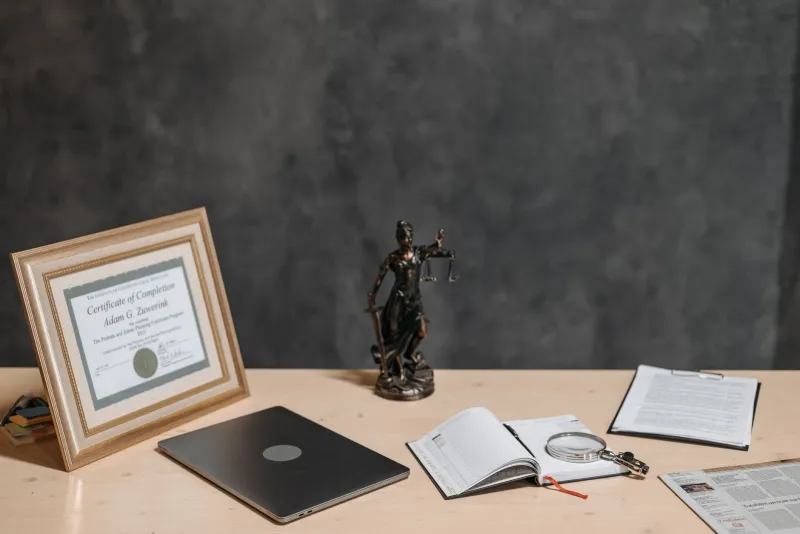
Consulting a family law attorney with experience in high-value asset division is not an overreaction; it is due diligence. For collections of meaningful worth, the distinction between what is sentimentally difficult to part with and what is legally required to relinquish must be made with clear eyes.
The Appraisal as a Starting Point
Once ownership is established, a comprehensive, current appraisal of the relevant pieces is essential. Market values shift, and an appraisal conducted at the time of purchase may bear little resemblance to a piece's current worth. A certified gemologist or independent appraiser — ideally one with no prior relationship to either party — can provide valuations that serve as the foundation for any negotiation.
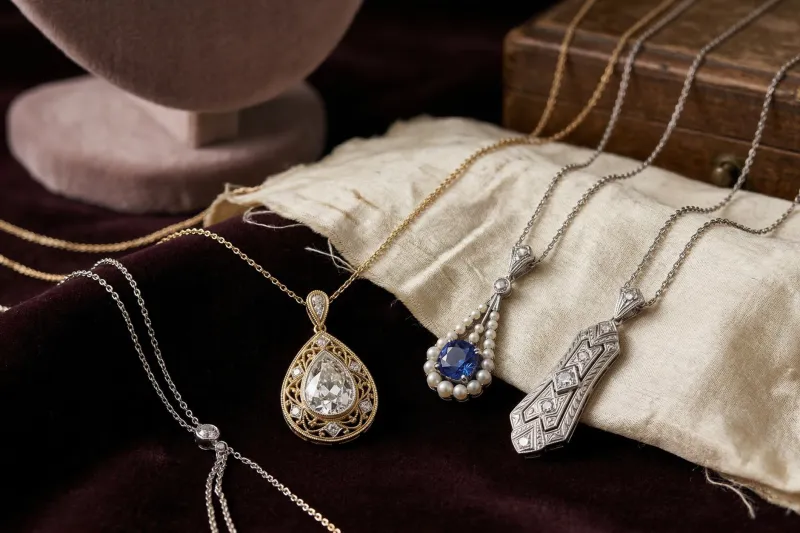
For collectors who have assembled pieces of genuine rarity or provenance, this step is particularly critical. A vintage Art Deco brooch, a natural colored gemstone ring, or a signed designer piece may carry value that a general settlement would underestimate. Protecting that value begins with documentation.
The Psychology of Keeping What Hurts
Practical matters aside, the more difficult question is often whether to keep a piece at all. Collectors who have spent years developing a refined aesthetic and a coherent jewelry identity frequently find that certain pieces — however beautiful — have become inseparable from a narrative they are actively trying to leave behind.
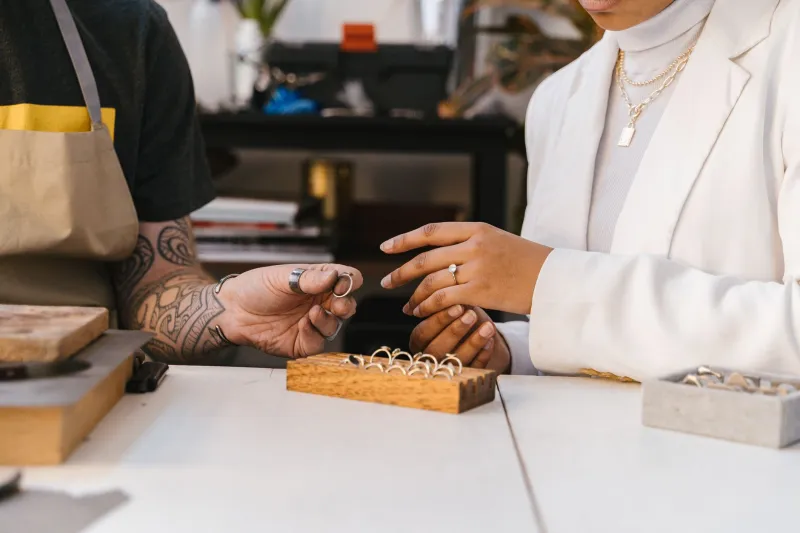
Jewelers who specialize in redesign work report that inquiries from recently separated clients represent one of their most consistent and emotionally nuanced commissions. The request is almost always the same in spirit, if varied in detail: transform this into something that belongs to me alone.
This impulse is not merely sentimental. It is, in fact, one of the most sophisticated responses available to a collector. Rather than selling a stone of genuine quality at a fraction of its value on the secondary market, or allowing a piece to languish unworn in a velvet drawer, redesign offers continuity of investment with a complete rupture of association.
Redesign: The Art of Reclamation
The most meaningful transformation available to a collector after separation is not disposal — it is reinvention. A round brilliant diamond that once anchored an engagement ring can be reset into a bold solitaire pendant. A cluster of anniversary stones can be reinterpreted as a stack of individual bands. A bracelet laden with shared memory can be deconstructed and rebuilt into something that speaks exclusively to who you are now.
The finest custom jewelers in the United States approach this work with both technical precision and genuine sensitivity. They understand that the client arriving with a bag of disassembled pieces is not simply commissioning a new design — they are, in a very real sense, commissioning a new chapter.
When selecting a jeweler for this kind of work, prioritize those who take the time to understand your current aesthetic rather than simply your existing stones. The goal is not to disguise the past but to reclaim the material for your future.
What to Release, and Why That Can Be an Act of Elegance
Not every piece warrants redesign, and not every piece warrants keeping. For some collectors, the cleanest path forward is also the most financially sound: selling pieces that carry no design flexibility, no sentimental complexity, and no personal resonance.
The secondary market for fine jewelry — particularly for pieces by recognized designers or featuring exceptional stones — is more robust than many collectors realize. Estate jewelers, auction houses specializing in fine jewelry, and curated consignment platforms all offer avenues for converting a piece from a painful reminder into liquidity that can fund an acquisition far more aligned with your present self.
There is no sentimentality in this approach that need be apologized for. The most discerning collectors understand that a collection is a living entity. Releasing what no longer belongs is not loss — it is curation.
Building Forward: Your Collection, Redefined
Perhaps the most overlooked dimension of this transition is the opportunity it presents. A collection that has been honestly assessed, legally clarified, emotionally interrogated, and thoughtfully edited is a collection ready to evolve. The pieces that remain — whether original, redesigned, or newly acquired — now carry a different weight. They are chosen entirely by you, for you, in the context of the life you are actively constructing.
For collectors willing to move through this process with patience and intention, what begins as loss can resolve into something far more valuable: a jewelry identity that is, at last, entirely your own.