When the Heart Outbids the Market: Rethinking What Jewelry Is Truly Worth
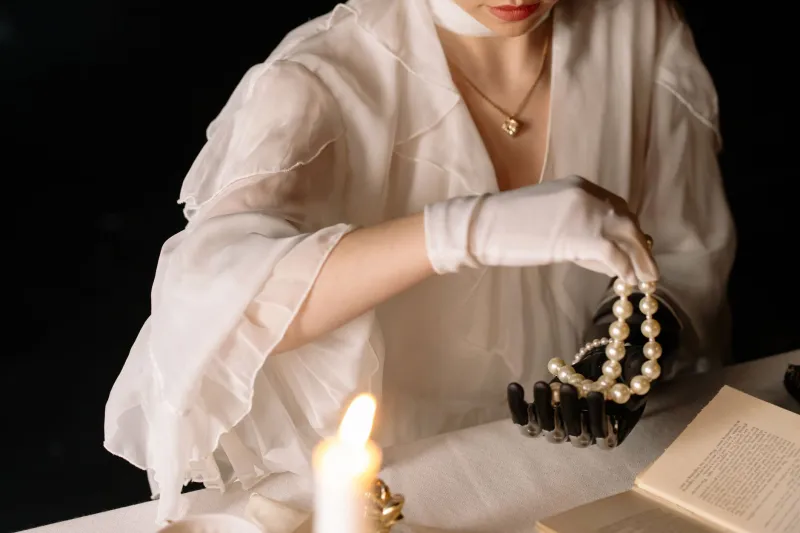
There is a particular kind of discomfort that surfaces when someone asks a serious collector what a beloved piece is "worth." The question feels simultaneously answerable and wholly inadequate. An appraiser can assign a figure. A secondary market can confirm or contradict it. But neither instrument captures what happens when a woman clasps her grandmother's sapphire brooch before an important meeting, or when a man slips on his late father's signet ring for the first time. That transaction — invisible, immeasurable, and utterly real — is the one that endures.
The jewelry world has long operated with a quiet paradox at its center: the pieces that appreciate most dramatically on paper are not always the ones that matter most in life. And for the collectors who have been at this long enough, that tension is not a problem to be solved. It is a truth to be understood.
The Financial Case, Honestly Stated
Let us be precise about what jewelry can and cannot do as a financial instrument. Certain categories — signed pieces from storied houses, diamonds of exceptional provenance, natural colored gemstones in rare hues — have demonstrated meaningful appreciation over time, particularly when accompanied by documentation and original packaging. Auction records from Christie's and Sotheby's confirm that the top tier of the market behaves with the seriousness of fine art.
However, the vast majority of jewelry purchases, even thoughtful ones, do not generate returns that rival diversified equity portfolios or real estate holdings. Retail markups, fluctuating commodity prices, and the highly subjective nature of taste mean that most pieces, if sold on the open market within a decade of purchase, will return less than their original price. This is not a flaw in the system. It is simply the honest arithmetic of a category that has never been purely financial.
The collector who enters a jeweler's salon expecting the experience of a brokerage account will be perpetually disappointed. The collector who understands that jewelry operates across two registers simultaneously — the financial and the personal — will find the category endlessly rewarding.
The Emotional Return on Investment
Consider a scenario familiar to many American families: a modest diamond pendant purchased in the 1970s for a few hundred dollars. By any contemporary market standard, its resale value is unremarkable. The stone is not exceptional. The setting is dated. A dealer would offer a fraction of its replacement cost.
And yet, when that pendant passes from a mother to a daughter at a milestone birthday, its value in the room is beyond calculation. It carries decades of presence — school mornings, holiday dinners, ordinary Tuesdays made slightly more beautiful by its quiet glitter at a neckline. The daughter who receives it is not acquiring an asset. She is receiving a continuous thread of identity, love, and memory rendered in metal and stone.
This is what sophisticated collectors mean when they speak of emotional return on investment. It is not sentiment dressed up in financial language. It is a genuine acknowledgment that jewelry, uniquely among asset classes, accumulates meaning in a way that compound interest cannot replicate.
How the Most Discerning Collectors Navigate the Tension
The collectors who manage this paradox most gracefully tend to operate with a dual framework. They ask two questions of every potential acquisition, and they require honest answers to both.
The first question is financial: Does this piece represent a reasonable expenditure relative to its craftsmanship, material quality, and potential for appreciation? This is not about expecting outsized returns. It is about avoiding purchases that are simply imprudent — pieces that are overpriced for their category, poorly made, or divorced from any meaningful provenance.
The second question is personal: Does this piece resonate with something real in my life — my aesthetic, my history, the people I love, the moments I wish to mark? This is where the more nuanced judgment lives. A ring purchased to commemorate a professional milestone, even if it never appreciates in market value, may be one of the most important acquisitions a collector ever makes.
When both questions yield affirmative answers, the acquisition is straightforward. When only the financial case is strong, experienced collectors often pause. A piece that is merely a good investment but does not speak to the collector's deeper sensibility tends to sit unworn, and an unworn piece is a diminished one.
The Pieces That Prove the Point
History is generous with examples. Many of the pieces that have commanded the most extraordinary prices at auction were not purchased as investments. Elizabeth Taylor's collection was assembled through love, theatrical passion, and an almost theatrical appetite for beauty. When it came to market, the emotional biography of each piece — who gave it, under what circumstances, what it meant — drove prices far beyond what the stones alone would have justified.
On a more intimate scale, the same principle holds. Estate sales conducted by American auction houses regularly reveal collections that defy simple financial logic: modest pieces in impeccable condition, clearly worn and loved, that attract bidders drawn not to gemological rarity but to the palpable sense that someone treasured these objects. That residual warmth has value, even if it does not appear on an appraisal certificate.
A More Complete Definition of Value
The most useful reframe available to today's collector is to retire the binary of financial versus emotional value and replace it with a more complete definition of worth. A piece that is beautifully made, ethically sourced, resonant with personal meaning, and reasonably priced for its category is, by any sophisticated measure, a sound acquisition — regardless of whether it outperforms the S&P 500.
Jewelry has always been humanity's most personal form of portable wealth. Long before there were markets to price it, there were people who wore it to signal love, status, faith, and memory. The financial dimension is real and worth understanding clearly. But it is the younger sibling of something older and more durable: the human need to adorn ourselves with objects that mean something.
The collector who honors both dimensions — who buys with both eyes open and both chambers of the heart engaged — is the one who builds not merely a collection, but a legacy. And that, in the end, is the only return that truly compounds.